
What is Subgrade Bearing Capacity?
Subgrade bearing capacity refers to the load-bearing potential of foundation soil per unit area as the load increases, typically measured in kPa. It is a comprehensive term used to evaluate the stability of a foundation. It should be noted that subgrade bearing capacity is a practical engineering term for foundation design rather than a fundamental property of soil. The shear strength theory of soil serves as the theoretical basis for studying and determining subgrade bearing capacity.
Under load, the foundation undergoes deformation. As the load increases, the deformation gradually intensifies. Initially, the soil stress remains in an elastic equilibrium state, maintaining a safe load-bearing capacity. However, when the load reaches a point where shear stress in a localized area exceeds the soil’s shear strength limit, that region enters a state of plastic failure, leading to stress redistribution. This localized shear failure zone is called the plastic zone.
Small-scale plastic zones can often revert to elastic equilibrium, allowing the foundation to stabilize while maintaining safe bearing capacity. However, deformation increases noticeably, requiring verification that calculated deformations do not exceed permissible limits. If the load continues to rise, larger plastic zones form, indicating insufficient bearing capacity and potential instability—this marks the ultimate bearing capacity of the foundation.
Methods for Testing Subgrade Bearing Capacity
1. Plate Load Test (PLT)
Applicable to: All soil types, soft rock, and weathered rock.
The plate load test is one of the earliest and most widely used in-situ testing methods. It involves incrementally loading a rigid bearing plate and measuring settlement to determine:
- Bearing capacity from the load-settlement curve.
- Soil deformation modulus.
- Undrained shear strength and maximum fill height.
2. Screw Plate Load Test (SPLT)
Applicable to: Soft soils, cohesive soils, silts, and sandy soils.
A spiral-shaped plate is screwed to the desired depth, and load is applied via a rod while measuring settlement.
3. Standard Penetration Test (SPT)
Applicable to: Cohesive soils, silts, and sandy soils.
SPT is a dynamic penetration test where a 63.5 kg hammer drops 76 cm to drive a sampler into the soil. The blow count (N-value) for 30 cm penetration determines soil density and bearing capacity.
Key Equipment:
- Standard Penetration Analyzer: Measures hammer energy efficiency (e.g., donut hammer: 45%, safety hammer: 60%, automatic hammer: 80%) to improve N-value reliability.
4. Dynamic Penetration Test (DPT)
Applicable to: Cohesive soils, sandy soils, and gravelly soils.
DPT assesses soil resistance by driving a cone-shaped probe with a hammer and recording blow counts.
Equipment Examples:
- APAFOR Heavy Dynamic Penetrometer: Combines dynamic probing and sampling, compliant with NF P 94-114/115 standards.
- APAFOR 100: High energy-to-weight ratio, portable, and suitable for compaction control.
5. Cone Penetration Test (CPT)
Applicable to: Soft soils, cohesive soils, silts, sandy soils, and lightly gravelly soils.
CPT involves pushing a conical probe into the soil at a constant rate to measure tip resistance and sleeve friction, classifying soil layers and properties.
Equipment:
- FOX-100/200: Standalone penetrometers (100 kN/200 kN capacity) with hydraulic anchoring.
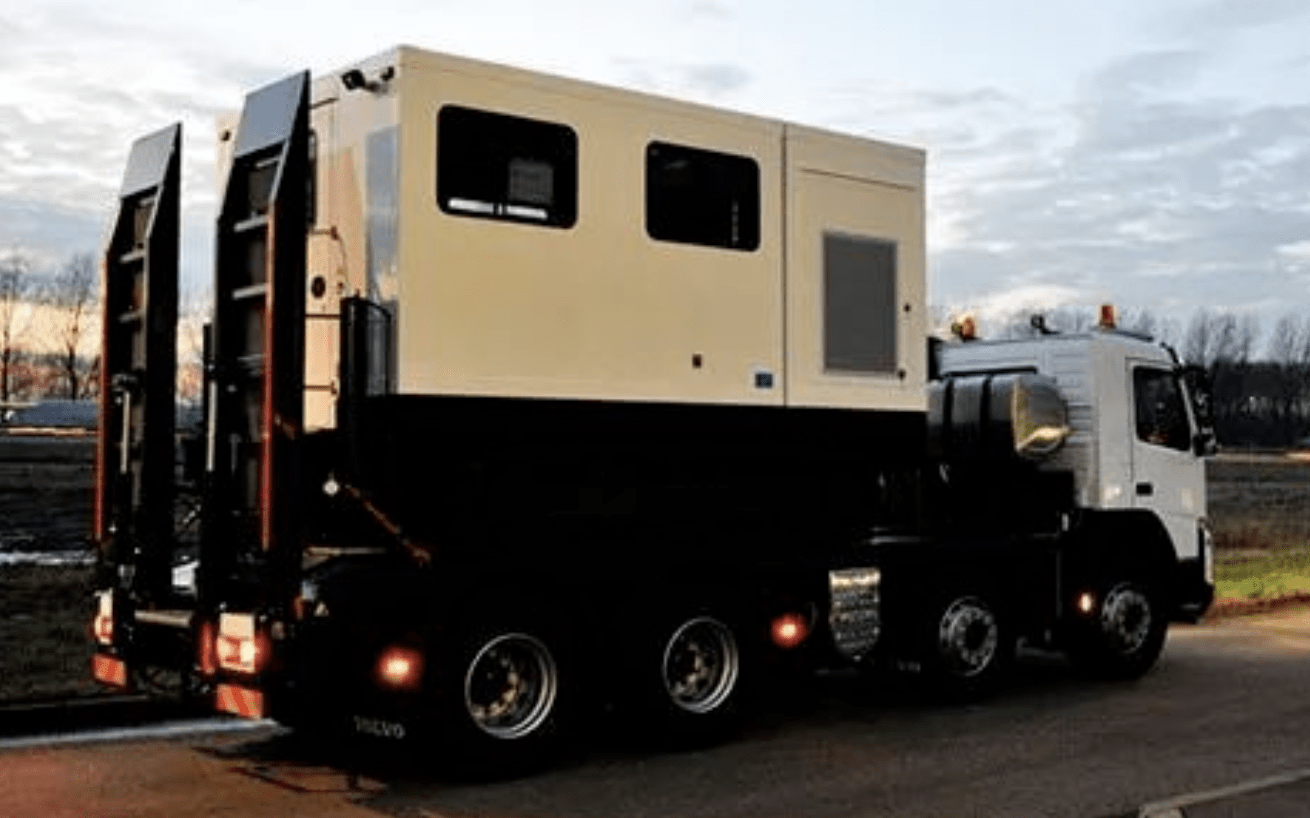
- CPT Truck: Integrated system for automated, high-mobility testing in harsh conditions.
6. Rock Direct Shear Test
Applicable to: Rocks with weak structural planes or soft rock.
Measures shear strength along weak planes or rock-concrete interfaces to analyze deformation and failure mechanisms.
7. Pressuremeter Test (PMT)
Applicable to: Cohesive soils, silts, sands, soft rocks, and weathered rock.
A cylindrical probe expands radially in a borehole to derive a pressure-volume curve, estimating bearing capacity, strength parameters, and settlement.
Types:
- Pre-bored PMT (Ménard): Classic method compliant with EN ISO 22476-4.
- Self-boring PMT (Cambridge): Combines drilling and testing for minimal disturbance.
8. Vane Shear Test (VST)
Applicable to: Saturated soft clays (undrained shear strength and sensitivity).
A four-bladed vane is rotated in soil until shear failure; peak and remolded strengths are recorded.
Equipment:
- GVT-100 Electric Vane Shear Tester: PLC-controlled with high-precision torque measurement.
9. Stress Pad Test
Applicable to: Soft, saturated cohesive soils.
A hollow steel blade filled with silicone oil measures pressure via embedded sensors.
10. Flat Dilatometer Test (DMT)
Applicable to: Soft soils, cohesive soils, loose-to-medium dense sands, and silts.
A flat blade with a membrane is inflated to measure soil stiffness and other parameters. While less common than CPT for axial pile design, DMT is useful for lateral load analysis.
Equipment:
- DMT Standard Blade: Hydraulically inserted, providing repeatable, minimally disturbed results.