
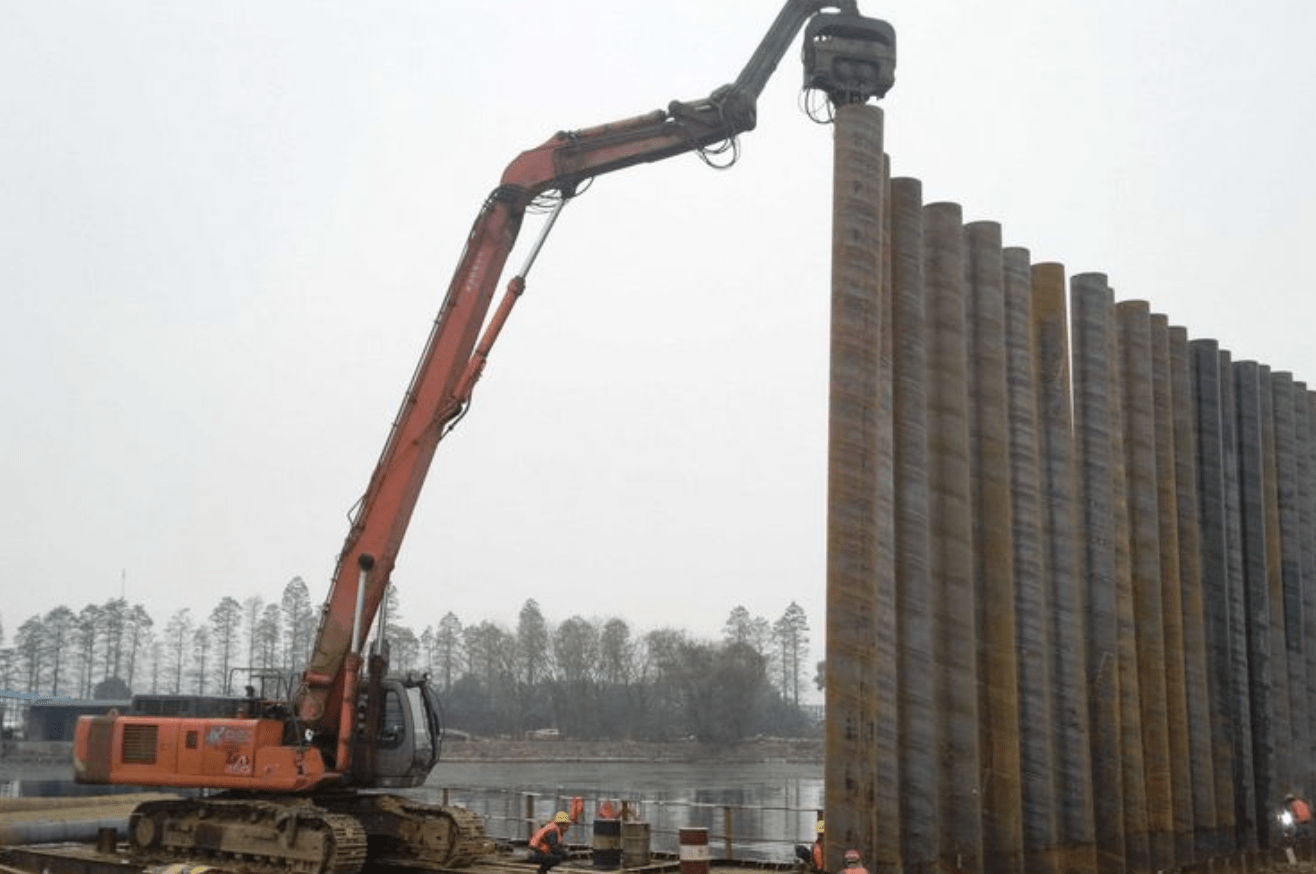
Pile foundations are a crucial solution in various construction scenarios where traditional shallow foundations are inadequate. This article explores the situations that necessitate pile foundations and guides on selecting the appropriate pile type for optimal performance and cost-effectiveness.
Situations That Require Pile Foundations
-
Weak Soil Conditions – When the natural ground cannot provide sufficient bearing capacity or meet deformation requirements, pile foundations transfer loads to deeper, more stable soil layers.
-
Strict Deformation Control – If a structure demands minimal settlement or differential movement, piles offer greater stability.
-
High-Rise Structures – Tall buildings or towers requiring strict tilt limitations benefit from deep foundation support.
-
Adjacent Structure Protection – When foundation settlement could negatively impact nearby buildings, piles minimize interaction effects.
-
Heavy Industrial Facilities – Factories with large-tonnage cranes, frequent dynamic loads, dense equipment layouts, and ground loads often experience significant soil deformation, making pile foundations essential.
-
Precision Machinery Bases – Equipment with strict vibration and amplitude tolerances (e.g., sensitive industrial machines) often relies on piles for stability.
-
Seismic Zones with Liquefiable Soil – Piles extending through liquefiable layers into stable strata mitigate earthquake-induced liquefaction risks.
Key Factors in Pile Selection
Choosing the right pile type involves multiple considerations:
-
Structure Type (e.g., frame, shear-wall, or industrial buildings)
-
Load Characteristics (magnitude, static vs. dynamic)
-
Soil Conditions (bearing strata, groundwater, soil layers)
-
Construction Constraints (noise, vibration, space)
-
Local Expertise & Cost
Recommended Pile Types by Structure
For Frame & Industrial Structures
-
End-Bearing Piles (Rock or Dense Soil) – Large-diameter drilled shafts (bored piles) or cast-in-situ piles (e.g., drilled or auger-cast piles) are ideal for high load-bearing needs.
-
Single Pile-Single Column Design – Simplifies foundation design when bedrock is accessible.
For Residential & Commercial Buildings
-
Low-Rise (≤10 Floors) → 400–500mm diameter bored piles or 250–300mm precast piles.
-
Mid-Rise (10–20 Floors) → 600–1000mm bored piles or 400–500mm precast piles.
-
High-Rise (20–30 Floors) → 700–1200mm bored piles or 400–600mm precast piles.
-
Super High-Rise (30–40 Floors) → 800–1500mm large-diameter bored piles.
Environmental & Geotechnical Considerations
-
Urban Areas (Noise/Vibration Sensitivity) → Non-displacement piles (e.g., drilled shafts, CFA piles) avoid soil displacement issues.
-
Challenge: Requires proper slurry/disposal management.
-
-
Problematic Soils
-
Loose Sands/High Water Table → Risk of borehole collapse; casing or slurry stabilization is critical.
-
Thick Soft Clay → Risk of hole instability; requires optimized drilling mud.
-
-
Hard Inclusions (Boulders/Hard Layers) → Precast piles (e.g., PHC piles) may face refusal or damage; drilled piles are preferable.
-
Sloping Bedrock/Uneven Strata → Precast piles risk misalignment; cast-in-situ piles adapt better.
When to Avoid Precast Piles
-
Shallow Hard Rock (e.g., Limestone) → Pile tips may shatter during driving.
-
Variable Soil Layers → Difficult to predict required pile lengths.
-
Steeply Sloping Strata → Piles may deflect or break during installation.
Conclusion
Pile foundations are indispensable for challenging soil conditions, heavy loads, and strict deformation controls. The optimal pile type depends on structural needs, geotechnical factors, and environmental constraints. By evaluating these factors, engineers can ensure durable, cost-effective foundation solutions that enhance project success.