
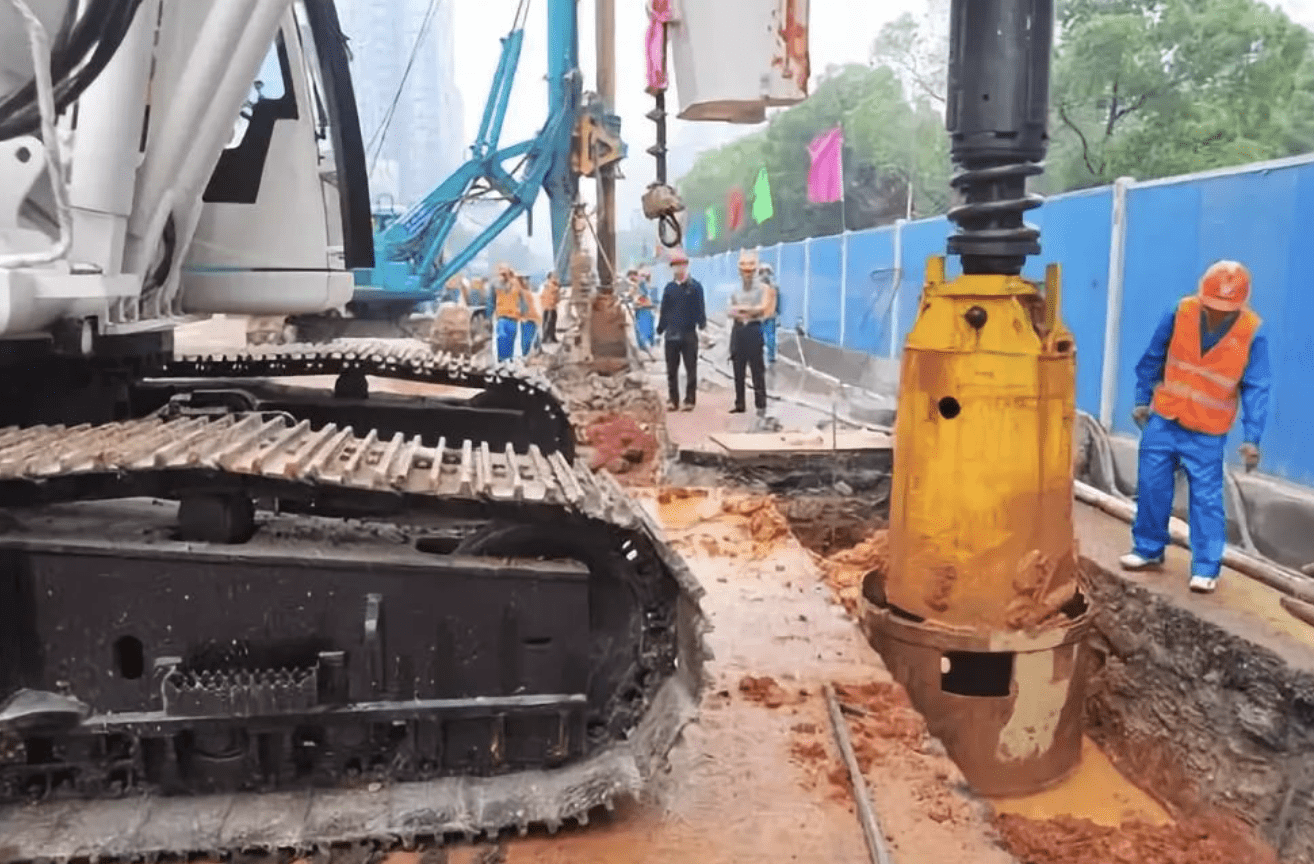
The Origin and Evolution of Pile Foundations
Pile foundations represent one of the oldest foundation types, with a history spanning at least 12,000 to 14,000 years. Archaeological discoveries at China’s Hemudu site in Zhejiang and Banpo Village in Shaanxi reveal that wooden piles were used as early as 7,000 years ago to support structures.
Initially, all piles were made of wood. It wasn’t until the 1820s that cast iron sheet piles were introduced for constructing cofferdams and docks. The late 19th century brought a revolution in pile materials with the advent of steel, cement, concrete, and reinforced concrete, accelerating the development of pile foundations.
-
1898: Russian engineer Strauss proposed cast-in-place concrete piles.
-
1901: American engineer Raymond introduced the concept of driven cast-in-place piles.
-
Early 20th century: Steel piles and precast reinforced concrete piles emerged and were widely adopted, such as in the steel bridges over the Mississippi River.
-
1930s: Steel piles gained popularity in Europe.
-
Post-WWII: Advancements in metallurgy led to the use of seamless steel pipes as pile materials.
In China:
-
1950s: Precast reinforced concrete piles were first produced.
-
Late 1950s: The railway industry began using prestressed concrete piles.
-
1960s–70s: Prestressed concrete pipe piles were developed and widely applied in bridge and port engineering.
With expanding applications, advancements in machinery and construction techniques have led to numerous new pile types and methods, making pile foundations viable even in complex geological and environmental conditions. Today, pile foundations are extensively used in:
✔ High-rise buildings
✔ Bridges & docks
✔ Transmission towers
✔ Offshore oil platforms
Ongoing research in design theory, construction techniques, testing methods, and innovative pile types has made pile foundation technology a rapidly evolving field worldwide.
What Is the Function of a Pile Foundation?
A pile foundation is a deep foundation system consisting of piles and a pile cap that connects them.
How Piles Work:
-
Piles are column-like elements embedded in the soil.
-
They transfer structural loads from the superstructure through the pile cap to the bearing stratum.
Key Functions of Pile Foundations:
-
Load Transfer & Seismic Resistance – Prevents soil liquefaction during earthquakes.
-
Uplift & Overturning Resistance – Essential for tall structures like chimneys.
-
Soil Compaction – Densifies loose, non-cohesive soils.
-
Settlement Control – Minimizes differential settlement.
-
Increased Stiffness – Enhances foundation rigidity.
-
Scour Resistance – Improves safety in water-based structures.
Key Characteristics of Pile Foundations
Compared to other foundation types, pile foundations offer:
✔ High Adaptability – Suitable for complex geological conditions and various construction sites.
✔ Effective Load Transfer – Controls the settlement of structures.
✔ High Load-Bearing Capacity – Supports heavy structures like warehouses.
✔ Excellent Seismic Performance – Resists earthquake forces.
✔ High Mechanization – Enables efficient construction.
When Should Pile Foundations Be Used?
Pile foundations are recommended for:
-
High-Rise Buildings – Where excessive or uneven settlement is unacceptable.
-
Heavy Industrial Structures – Such as factories and storage facilities.
-
Tall Structures (Chimneys, Transmission Towers) – To resist uplift and lateral forces.
-
Sensitive Equipment Foundations – To minimize vibration and settlement.
-
Soft or Problematic Soils – Where shallow foundations are inadequate.
Important Considerations:
-
If a strong bearing layer lies deep beneath soft soil, piles are ideal.
-
If soft soil is too thick, settlement issues must be evaluated.
-
Poor design or construction can lead to foundation failures—proper site investigation, design, and execution are crucial.
By adhering to these principles, pile foundations ensure stability, safety, and longevity for structures worldwide.