Introduction
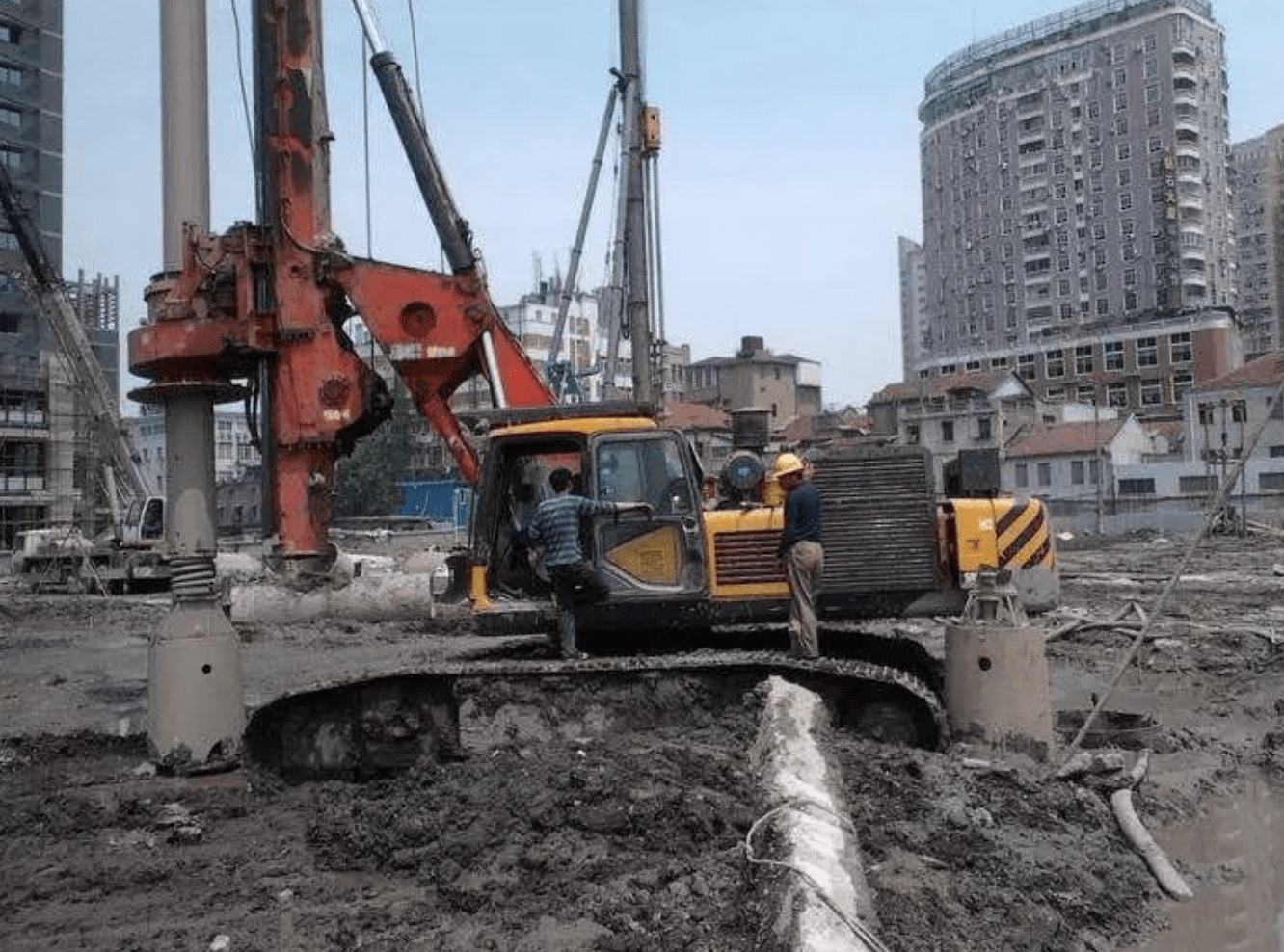
Rotary drilling rigs, introduced to China in recent years, have revolutionized construction practices—especially in cast-in-place pile engineering. These electro-hydraulic integrated machines offer high efficiency, superior quality, pollution-free operation, and exceptional mobility, making them widely adopted by contractors and designers. While their economic and social benefits are significant, operational challenges like jamming (drill bit sticking) persist. This article analyzes the causes of jamming and proposes preventive measures and solutions.
1. Causes of Jamming
Jamming occurs when the drill bit becomes stuck during penetration or lifting, rendering rotation and hoisting impossible despite normal rig function. Key causes include:
(1) Borehole Wall Collapse
-
Scenario: Sudden collapse of loose formations (e.g., sandy gravel or quicksand layers) buries the drill bit.
-
Risk Factors: Poorly compacted strata or inadequate slurry support.
(2) Operational Errors
-
Excessive Penetration: Over-advancement in cohesive soils or transition layers (e.g., sand to clay) causes borehole narrowing.
-
Critical Depth: Beyond 15m, single-pass penetration should not exceed 40cm.
(3) Bit Wear
-
Worn Side/Edge Cutters: Reduce borehole diameter, eliminating clearance between the drill barrel and wall.
-
Maintenance Neglect: Failure to repair or replace damaged cutters exacerbates jamming risks.
(4) Mechanical Failures
-
Sudden Stoppage: Broken wires, disengaged joints, or engine failure leave the bit idle too long, leading to sediment buildup or wall shrinkage.
2. Preventive Measures
Proactive strategies minimize jamming risks and associated costs:
(1) Geological Assessment
-
Study strata reports and monitor real-time changes.
-
Reinforce unstable layers (e.g., gravel/quicksand) with extended casings or optimized slurry viscosity.
(2) Operational Discipline
-
Limit penetration depth in cohesive soils.
-
Adjust pressure during layer transitions to avoid abrupt loading.
(3) Bit Maintenance
-
Ensure the drill barrel diameter is 6cm smaller than the borehole.
-
Regularly replace side/edge teeth and verify hook integrity.
(4) Rig Maintenance
-
Engine: Address power loss promptly to prevent stalling.
-
Hydraulics: Prevent pressure drops from valve/line issues.
-
Accessories: Inspect wires, joints, and pins routinely.
-
Contingency: Keep spare parts and auxiliary equipment (e.g., cranes) on-site for emergencies.
(5) Slurry Management
-
Optimize density/viscosity to delay sediment accumulation during downtime.
3. Solutions for Jamming Incidents
(1) Initial Response
-
Determine depth and cause (collapse vs. mechanical).
-
For sediment-heavy cases, Clean the hole before recovery efforts.
(2) Self-Recovery Techniques
-
Hydraulic Adjustment: Increase system pressure to boost torque, then alternate rotation while lifting.
-
Mast Tilting: Carefully raise the mast to augment hoisting force (requires expert oversight).
-
Applicability: Effective only in early-stage jamming.
(3) Assisted Recovery
-
Direct Hoisting: Deploy cranes/virtual lifters. Example: Four 45-ton cranes + rig winch resolved a 72-hour jam in Beijing.
-
Peripheral Clearing: Use reverse circulation or airlifting to reduce friction around the bit. Successfully tested in Wuhan.
-
Manual Excavation: For shallow jams, dewater the hole and remove sediment manually (requires stabilized walls).
4. Conclusion
Jamming poses severe operational and financial risks. Prevention through stratified planning, disciplined operation, and rigorous maintenance is paramount. Sites should prepare rescue protocols and mobilize resources swiftly if jamming occurs. Historical data shows that rapid, methodical responses mitigate losses effectively.
Key Takeaways:
-
Prioritize pre-drilling geological surveys.
-
Enforce penetration limits and bit upkeep.
-
Maintain rig components and slurry quality.
-
Train teams for emergency recovery.
By integrating these practices, projects can maximize rotary rig efficiency while minimizing downtime.