Introduction
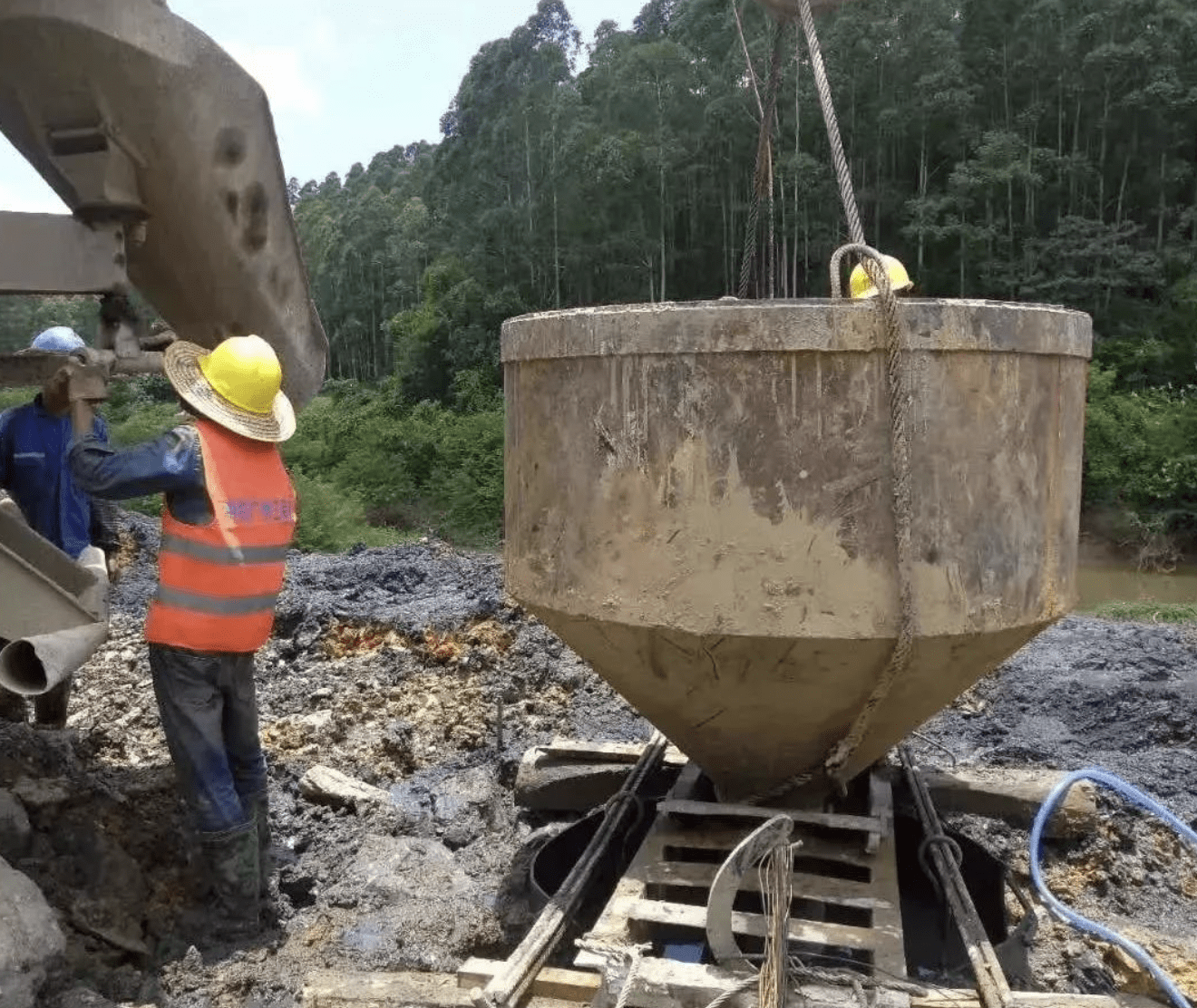
Bored piles offer significant advantages such as low construction noise, minimal vibration, adjustable length and diameter according to design requirements, reliable penetration into bearing strata, and high single-pile bearing capacity. However, from drilling to pile completion, various factors can lead to quality issues or even accidents, making quality control a critical challenge in construction.
Part 1: Rebar Cage Uplift (“Floating Cage”)
After being lowered to the designed depth, the rebar cage rises during concrete pouring, a phenomenon known as “floating cage.”
1.1 Causes
-
Insufficient clearance between the rebar cage and tremie pipe, oversized coarse aggregates, or uneven welded main reinforcement joints, causing the tremie flange to catch the cage.
-
Distortion of the cage, deformed stirrups, broken welds, or tilting tremie pipe leading to direct contact between the rebar and pipe.
-
Concrete hardening around the cage due to equipment failure and pouring delays, causing uplift when extracting the tremie pipe.
-
Excessive pouring speed, rapidly raising the concrete level, and generating upward buoyancy.
1.2 Solutions
-
If detected early, shake or rotate the tremie pipe to dislodge the cage.
-
If the cage rises while extracting the pipe, repeatedly move the pipe up and down to break contact.
-
Control the concrete pouring volume and speed if the cage rises with the concrete level.
Part 2: Rebar Cage Sinking (“Sinking Cage”)
The rebar cage drops below its designed position during concrete pouring.
2.1 Causes
-
Weak welding between the lifting bars and main reinforcement or detachment of the lifting rings.
-
Excessive force from tremie pipe movement, loosening the lifting rings, and causing the cage to sink.
2.2 Solutions
-
If the sinking depth is shallow (<2m), continue pouring and extend the cage after excavation.
-
If the sinking depth is unknown, consider pile replacement or structural reinforcement after consulting the designer.
Part 3: Tremie Pipe Breakaway
The tremie pipe detaches from the concrete surface, allowing slurry infiltration and causing necking or pile breakage.
3.1 Causes
Improper operator handling, extracting the pipe too quickly.
3.2 Prevention
Monitor the concrete level and calculate the embedment depth before extraction.
3.3 Solutions
-
Reinsert the pipe immediately and pump out infiltrated water.
-
Reinstall the tremie with a new drop ball and resume pouring.
Part 4: Embedded Tremie Pipe
The pipe remains stuck in hardened concrete, rendering the pile unusable.
4.1 Causes
-
Short concrete setting time or prolonged delays in pouring.
-
Pipe entanglement with rebar.
-
Borehole collapse buries the pipe.
4.2 Prevention
-
Ensure sufficient setting time and continuous pouring.
-
Avoid pipe-rebar contact.
-
Prevent borehole collapse with proper casing and slurry density.
4.3 Solutions
-
Rotate the pipe to detach it from the rebar if possible.
-
If extraction fails, abandon the pile and replace it after design approval.
Part 5: Pile Misalignment
Excessive deviation from the designed position after excavation.
5.1 Causes
-
Surveying errors or inaccurate drilling positioning.
-
Excessive excavation depth causes lateral soil pressure.
5.2 Prevention
-
Improve worker expertise and positioning accuracy.
-
Excavate in layers (max 4m per stage).
5.3 Solutions
For severe deviations, consult the designer for reinforcement or replacement.
Part 6: Water Seepage at Pile Head
Post-excavation water leakage at the pile head.
6.1 Causes
-
Poor concrete compaction, cracks, or excessive aggregate size.
-
High slurry density causes slurry pockets.
-
Mechanical damage during excavation.
-
Overuse of jackhammers during the cutoff.
6.2 Prevention
-
Optimize the concrete mix and vibration.
-
Maintain proper slurry density.
-
Avoid mechanical impacts.
-
Manual cutoff near the design head level.
6.3 Solutions
-
For shallow cracks, remove defective concrete and repour with the higher-grade mix.
-
For severe defects, consider pile replacement after assessment.
Conclusion
Effective bored pile construction requires strict adherence to procedures, continuous monitoring, and prompt corrective actions to mitigate common quality issues. Proper handling ensures structural integrity and long-term performance.