
Introduction
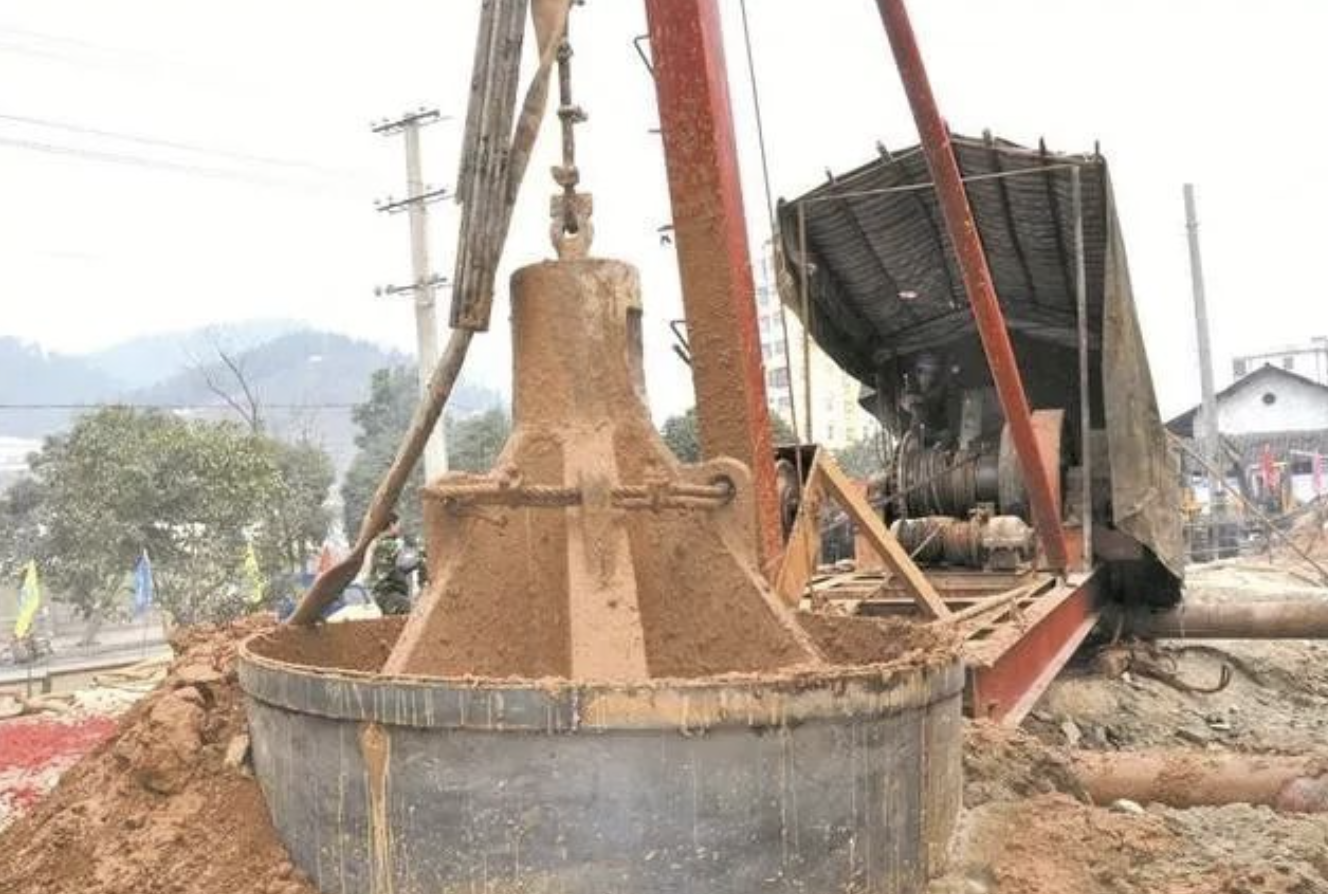
Pile foundations serve as a common foundation solution for bridge engineering, particularly in areas with poor soil conditions. They transfer structural loads to deeper, more competent soil layers or bedrock. This guide provides a detailed overview of bridge pile foundation construction methods, ensuring compliance with industry standards and optimal performance.
1. Pre-Construction Preparation
1.1 Review Design Documentation
-
Study construction drawings to understand structural requirements and material specifications.
-
Conduct site surveys with surveyors to assess terrain and identify underground utilities (e.g., fiber optic cables, gas pipelines).
1.2 Contract and Quantity Analysis
-
Clarify responsibilities and rights by reviewing subcontract agreements.
-
Verify bill of quantities (BOQ), including measurable items such as demolition, tree removal, and root excavation.
2. Construction Execution
2.1 Site Mobilization
-
Establish access roads and resolve utilities (power, water, accommodation) for the construction team.
-
Distribute approved drawings, work instructions, and technical specifications. Update teams on design changes promptly.
2.2 Key Construction Processes
(1) Construction Flowchart for Bored Piles
(Visual representation recommended for on-site reference.)
(2) Selecting Drilling Equipment
| Drill Type | Advantages | Limitations | Suitable Soil Conditions |
|---|---|---|---|
| Rotary Drilling | Fast, eco-friendly | High cost | Clay, silt, sand, soft soil, and strata with <20% gravel (particle size <2cm). |
| Auger Drilling | Reliable, low noise, cost-effective | Slow progress, mud disposal issues | Normal Circulation: Clay, sand, small gravel (<2cm). Reverse Circulation: Larger gravel (<2/3 drill pipe diameter). |
| Percussion Drill | Effective in hard strata | Slow, high vibration | Loess, cohesive soil, fill layers, boulder-rich strata, and bedrock. |
For this project, rotary or auger drills are recommended.
(3) Site Preparation
-
Leveling: Compact the ground and lay sleepers to form a stable drilling platform.
-
Marking Pile Positions: Set cross-shaped control stakes for accuracy verification.
-
Installing Casing:
-
Use steel casings (20cm wider than pile diameter, 2.5–3m height).
-
Bury casing ≥1m into natural soil, with 30cm aboveground.
-
Ensure vertical alignment (≤1% deviation) and center accuracy (≤50mm).
-
-
Mud Mixing: Prepare bentonite slurry (specific gravity: 1.1–1.3; viscosity: 16–28s; sand content ≤4%). Add sodium carbonate (Na₂CO₃) to enhance viscosity. Recycle slurry via sedimentation pits to minimize waste.
(4) Reinforcing Bar Protection
-
Use precast concrete or steel spacers (4 blocks per 2m interval) to maintain cover thickness.
(5) Drilling Process
-
Setup: Align the drill vertically (≤1% tolerance).
-
Initial Drilling: Slow-speed penetration until full drill entry. Adjust speed for soft/hard transitions.
-
Continuous Monitoring: Log soil changes, check slurry quality, and measure hole geometry (depth, diameter, verticality).
-
Termination Criteria: Verify design depth with a calibrated rope and inspect hole integrity using a cage-type tester.
(6) Hole Cleaning
-
Primary Cleaning: Remove sediments via slurry pumping until mud density ≤1.1 and sediment thickness ≤5cm.
-
Critical Notes: Maintain water head to prevent collapse; avoid over-drilling to compensate for cleaning.
(7) Reinforcing Cage Installation
-
Fabrication: Weld main bars to stiffening rings and bind spiral hoops. For piles >40m, embed sonic tubes (50% of shorter piles).
-
Handling: Store cages on wooden blocks to avoid deformation. Use a 25-ton crane for 3-point lifting (lower, mid, top sections).
-
Placement: Center the cage using Φ25 hanging bars fixed to the casing.
(8) Conduit Setup
-
Use 300 mm-diameter, quick-coupling steel pipes (2–4m lengths). Pressure-test (0.8 MPa) before deployment.
-
Suspend conduits 25cm above the hole base via a support frame.
(9) Secondary Cleaning
-
Recheck sediment levels before concreting. Use reverse circulation if exceeding limits.
(10) Underwater Concrete Pouring
-
Initial Pour: Ensure ≥1m conduit embedment (volume calculated to prevent washout).
-
Continuous Pouring: Maintain 2–6m conduit depth. Monitor slump (target: 180–220mm) and lift speed near reinforcement.
-
Completion: Over-pour by 0.5–1m for sound headcutting. Extract casing post-pouring.
3. Quality Control & Troubleshooting
3.1 Post-Construction Testing
-
Core drilling and sonic logging after 28-day curing to verify integrity.
3.2 Common Issues & Solutions
| Problem | Cause | Solution |
|---|---|---|
| Hole Collapse | Weak slurry, rapid drilling | Backfill with clay; reinforce casing. |
| Slurry Loss | High permeability strata | Add viscous additives or clay blocks. |
| Conduit Leakage | Poor seals, excessive lift | Replace conduit; re-pour with high-cement mix. |
| Reinforcement Float | Fast pouring near the cage | Reduce speed; elevate conduit above cage base. |
3.3 Defect Remediation
-
Grouting: For voids or weak zones, inject 0.8 water-cement ratio slurry at 0.7–0.8 MPa pressure. Verify with post-treatment coring.
Conclusion
Adhering to these protocols ensures durable, high-capacity pile foundations. Regular monitoring and adaptive techniques mitigate risks, aligning with global best practices for bridge longevity and safety.