
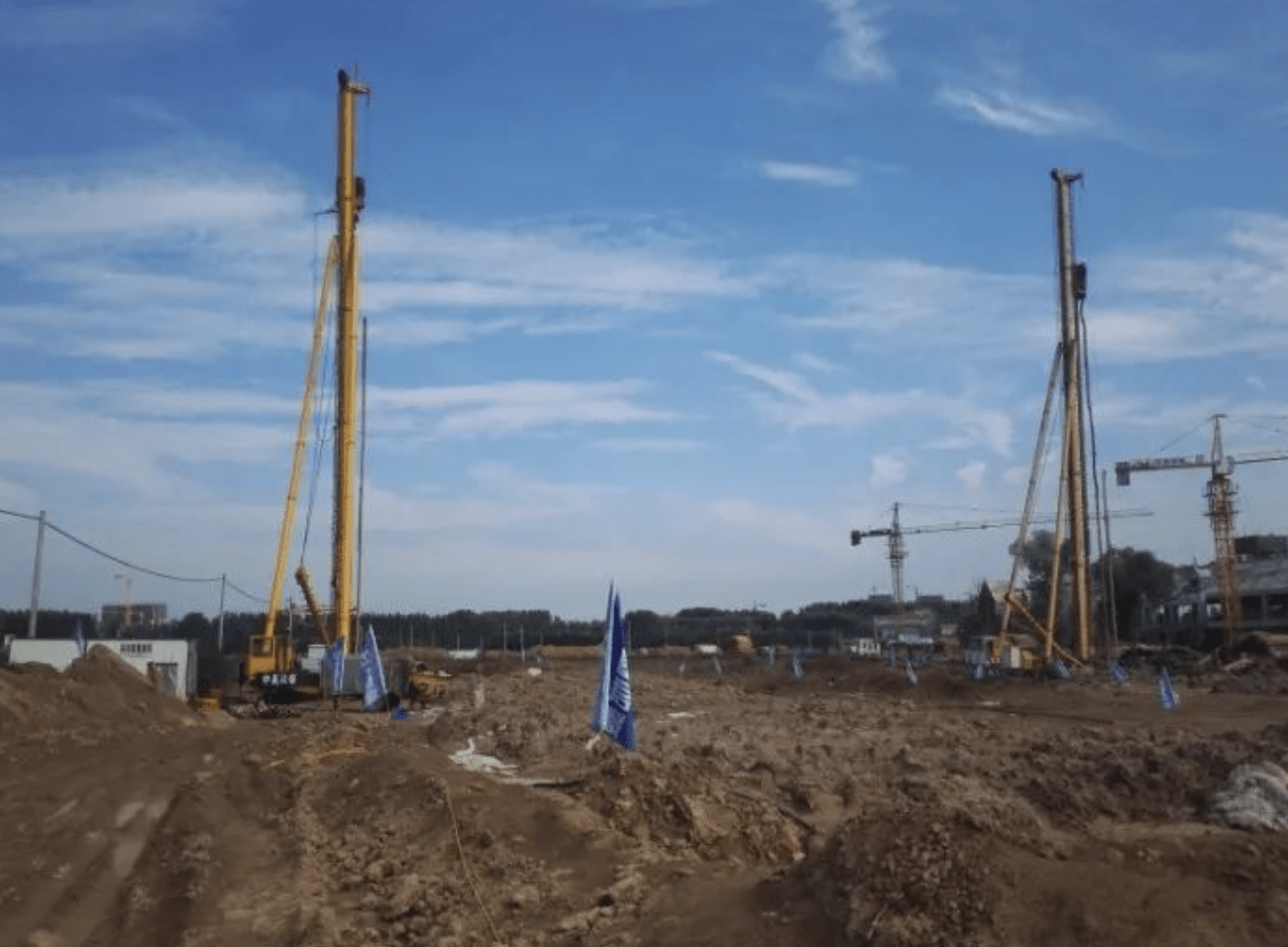
What is Foundation Pit Support Engineering?
Foundation pit support engineering refers to the structural measures taken during excavation to ensure slope stability, protect underground structures, and prevent damage to the surrounding environment. The selection of support methods depends on factors such as excavation depth, site conditions, adjacent structures, municipal roads, pipelines, hydrogeological conditions, and project schedule requirements.
Under similar conditions, the cost of support methods from low to high is as follows:
Slope excavation < Soil nailing wall (composite soil nailing) < Cement-soil gravity retaining wall < SMW method (steel-reinforced mixing wall) < Soldier pile wall < Diaphragm wall.
1. Slope Excavation
Key Considerations:
-
Slope ratio should be determined based on soil properties and excavation depth. For depths exceeding 4m, multi-level slopes with platforms should be used.
-
In areas with stable soil, natural slopes are preferred. For soft soil regions, slope surfaces should be reinforced with steel mesh and shotcrete.
-
If excavation is below the groundwater level, dewatering wells must be installed to enhance slope stability.
-
A drainage ditch or retaining wall should be constructed at the slope top to prevent water infiltration.
-
If there are local deep pits near the slope toe, the distance between them should be at least twice the depth difference; otherwise, slope stability must be recalculated.
2. Soil Nailing Wall (Composite Soil Nailing)
Used when space constraints prevent large-scale slope excavation.
Key Features:
-
Soil nail types: Steel pipe nails or reinforced bars with shotcrete facing.
-
Drainage measures: If stagnant water exists behind the wall, weep holes should be installed to reduce water pressure.
-
Prestressed anchor reinforcement: When using prestressed anchors, steel strand cables should be placed in the upper section or areas with high soil pressure and weak soil layers.
3. Cement-Soil Gravity Retaining Wall
Construction Guidelines:
-
Wall type: Typically constructed using double or triple-axis deep mixing piles with overlaps of 150mm–200mm. A concrete cap beam is recommended at the top.
-
Depth considerations:
-
For depths <16m, double-axis mixing piles are more cost-effective.
-
For depths >16m, triple-axis piles are preferred.
-
In soft soil (e.g., silt), cement content should be increased.
-
-
Layout: Piles should be arranged in a grid pattern for enhanced stability.
4. SMW Method (Steel-Reinforced Mixing Wall)
Best Practices:
-
Waterproofing: Double or triple-axis mixing piles should be constructed in interlocked patterns to ensure watertightness.
-
Steel beam selection:
-
Common H-beam sizes: H400×400, H500×200, H700×300, H800×300.
-
Layout options: alternate insertion, double insertion, or full insertion (increasing stiffness progressively).
-
Rental periods should ideally be ≤6 months for cost efficiency.
-
-
Friction reduction: Steel beams should be treated to facilitate removal post-construction.
5. Soldier Pile Wall
Critical Requirements:
-
Waterproofing: For excavations below groundwater, a cutoff curtain (e.g., double/triple-axis mixing piles) must be installed outside the piles.
-
Curtain depth:
-
<16m: Double-axis piles are economical.
-
>16m or dense sand layers: Triple-axis piles ensure better sealing.
-
In soft clay, a depth of 6–7m below the excavation is sufficient.
-
For sandy or permeable layers, the curtain should fully penetrate the aquifer.
-
-
“Pile-Wall Integration”: Reusing temporary piles as permanent structural walls reduces material waste and enhances cost efficiency.
6. Diaphragm Wall
Ideal for deep excavations (e.g., 3+ basement levels) in soft soil regions. The “Two-Wall Integration” method combines temporary support and permanent structural walls.
Construction Steps:
-
Guide walls: Reinforced concrete guide walls must be built on both sides.
-
Pre-reinforcement: In sandy or silty layers, cement-soil mixing piles should stabilize trench walls before excavation.
-
Slurry wall stability:
-
Natural slurry is preferred for trenching.
-
If inadequate, artificial slurry is used.
-
-
Waterproofing:
-
Jet grouting can seal panel joints.
-
Internal drainage systems (e.g., buttress columns, drainage ditches) prevent seepage.
-
Conclusion
Choosing the right foundation pit support method depends on soil conditions, depth, groundwater, and project requirements. Proper selection ensures safety, cost-efficiency, and minimal environmental impact. For long-term savings, consider integrated solutions like pile-wall or two-wall systems.