

What is a Gravel Pile?
Gravel piles (also known as stone columns or aggregate piers) are a type of granular pile used for ground improvement in soft soil foundations. These piles consist of unbound crushed stone (gravel or pebbles) that are compacted into pre-formed holes in weak subsoil layers, creating large-diameter dense columns. Together with the surrounding soil, they form a reinforced composite foundation system.
Classification by Construction Method
-
Vibro-Replacement (Wet Method) Gravel Piles: Created using vibration combined with water jetting
-
Dry Method Gravel Piles: Constructed through various waterless techniques, including:
-
Dry vibration
-
Vibration compaction
-
Hammer compaction
-
Dynamic replacement
-
When constructed using sand-gravel mixtures (containing coarse sand, medium sand, gravel, pebbles, or crushed stone), they are typically called sand-gravel piles.
Historical Development
The vibroflotation technique was first developed in 1937 by the German company Keller, creating the prototype of modern vibrators for compacting sandy soils. In the early 1960s, this method was adapted for cohesive soil improvement, using crushed stone as backfill material – hence the name “gravel piles.”
China began adopting vibro-replacement techniques in 1977. Due to environmental concerns about mud pollution in urban areas and potential soil softening effects, various alternative dry construction methods emerged in the 1980s, including:
-
Hammer compaction
-
Vibro-compaction
-
Dry vibration
-
Driven pipe methods
-
Vibro-air methods
-
Encased stone columns
-
Dynamic replacement methods
Applications in Soft Soil Foundations
Soft soil foundations typically consist of compressible layers, including:
-
Soft clay
-
Mucky soil
-
Hydraulic fill
-
Miscellaneous fill
-
Other highly compressible soils
These conditions are widespread throughout China, particularly in southeastern coastal regions, making gravel pile solutions critical for infrastructure projects.
Two Primary Applications
-
Drainage Function: Stone columns act as vertical drains to accelerate consolidation
-
Load-Bearing Function: Columns transfer structural loads to deeper, more competent strata
Gravel piles have become particularly valuable in areas lacking well-graded sand materials. The improved composite foundation achieves:
-
Increased bearing capacity
-
Reduced settlement
-
Enhanced liquefaction resistance
-
Effective drainage channels to dissipate excess pore water pressure during seismic events
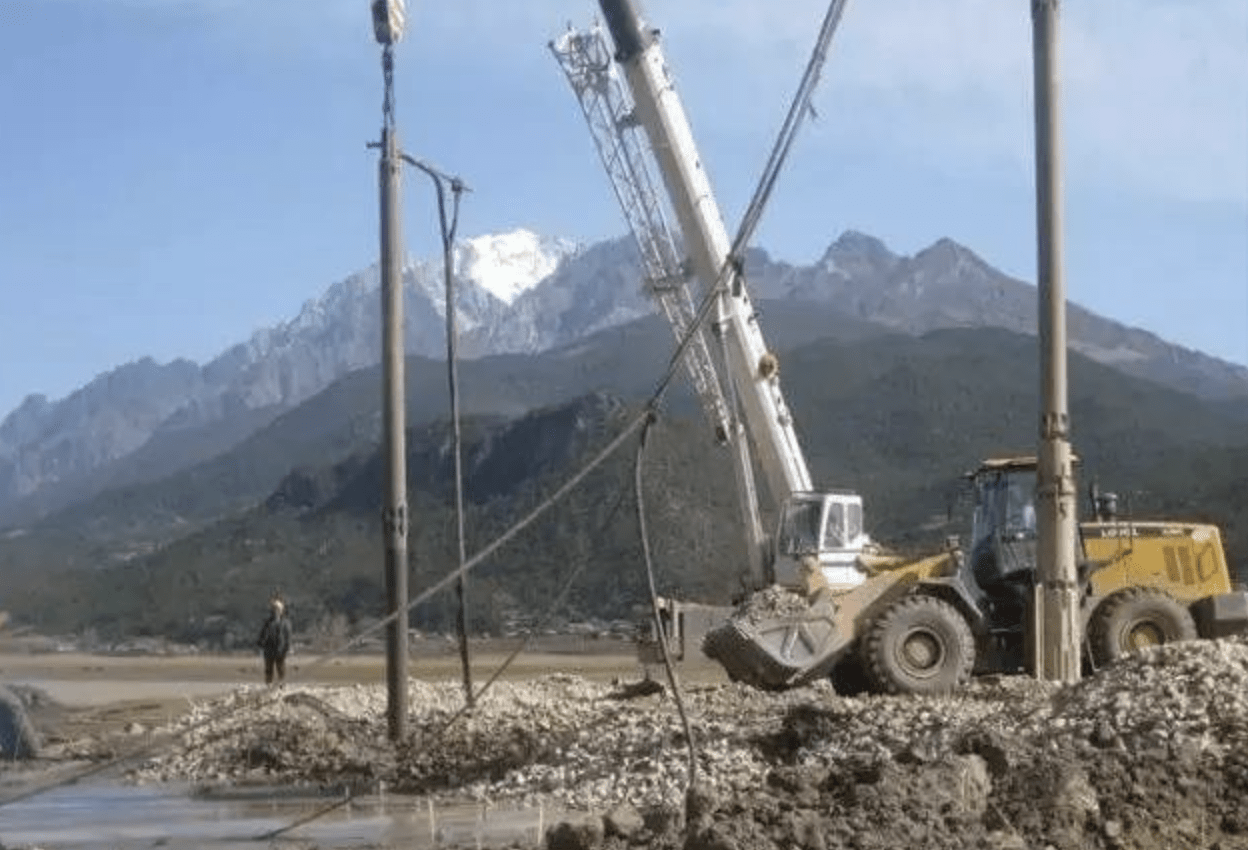
Vibro-Replacement Mechanism
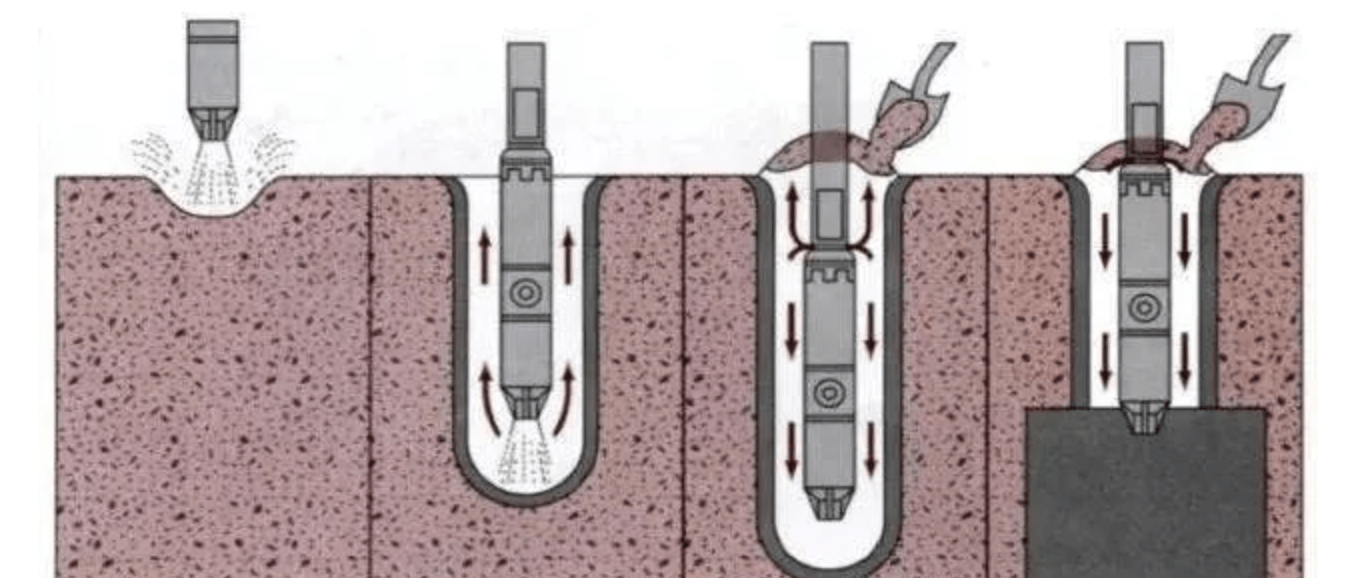
The vibro-replacement method combines vibration with water jetting to create stone columns:
-
A crane suspends a vibrator equipped with an eccentric weight and water jets
-
High-frequency vibration (typically 1800-3000 rpm) combined with water pressure (400-600 kPa) penetrates to design depth
-
The hole is cleaned and backfilled with gravel in stages
-
Each gravel layer is compacted before proceeding upward
-
The process continues until reaching the ground surface, creating a dense column
Improvement Mechanisms
For Cohesive Soils
In clayey soils (especially saturated soft clays), the primary mechanism is replacement rather than densification due to:
-
High clay content
-
Strong particle bonding
-
Low permeability prevents rapid drainage
The stiffer stone columns (with modulus 3-5 times higher than the surrounding soil) attract most applied stresses through stress concentration, effectively:
-
Increasing overall foundation capacity
-
Reducing total settlement
-
Improving slope stability by transferring potential failure surfaces deeper
For Granular Soils
In loose sandy deposits, the dominant mechanisms are:
-
Densification: Vibration rearranges particles into tighter configurations
-
Lateral compaction: Stone columns displace and compact adjacent soils
-
Drainage: Columns provide rapid drainage paths
This results in:
-
Increased relative density (typically 2-5x bearing capacity improvement)
-
Reduced porosity
-
Higher friction angles
-
Enhanced liquefaction resistance
Construction Quality Control
Equipment Requirements
-
Primary Equipment:
-
Vibratory hammer (common models: ZCQ-13, ZCQ-30, ZCQ-55)
-
Crane or specialized rig
-
High-pressure water pump (400-600 kPa)
-
Site Preparation
-
Utility Access:
-
Water supply for jetting and drainage for slurry removal
-
Stable power supply (three-phase + single phase, ±20V tolerance)
-
Adequate material stockpiles with efficient transport routes
-
-
Layout & Survey:
-
Grade site to approximately 1m above the design pile cutoff
-
Mark pile locations within a 3cm tolerance
-
Install dewatering systems if working below the groundwater
-
Construction Sequence
-
Positioning: Align the vibrator vertically over the designated point
-
Penetration:
-
Advance at 1-2 m/min under vibration and water jetting
-
Maintain >600 kPa water pressure
-
Pause periodically to allow cavity stabilization
-
-
Withdrawal: Retract at 2-3 m/min while initiating backfill
-
Compaction:
-
Add 0.15-0.5m gravel increments
-
Compact until achieving 50-60A current (or 60-80 kPa pressure)
-
Maintain vibration >30 seconds per increment
-
-
Completion: Document each pile (location, depth, material volume, time)
Material Specifications
-
Aggregate: 20-40mm well-graded crushed stone (max 50mm)
-
Quality: <10% fines content
-
Consumption: Monitor per-pile quantities closely
Common Challenges & Solutions
-
Power Interruptions: Maintain backup generators
-
Penetration Difficulties:
-
Increase water pressure (600-800 kPa)
-
Reduce the advancement rate
-
-
Low Compaction Current:
-
Reduce water flow
-
Increase backfill quantities
-
Extend vibration duration
-
-
Adjacent Structure Impacts: Monitor for cracking or settlement
Quality Assurance Measures
-
Process Control:
-
Maintain strict records of construction parameters
-
Verify alignment and verticality
-
-
Performance Verification:
-
Conduct plate load tests
-
Perform penetration testing between columns
-
Monitor settlement benchmarks
-
-
Material Compliance:
-
Regular gradation testing
-
Moisture content verification
-
Contamination checks
-
By implementing these comprehensive construction protocols, gravel piles can effectively transform weak soil foundations into competent supporting strata for various civil engineering applications.