
Introduction
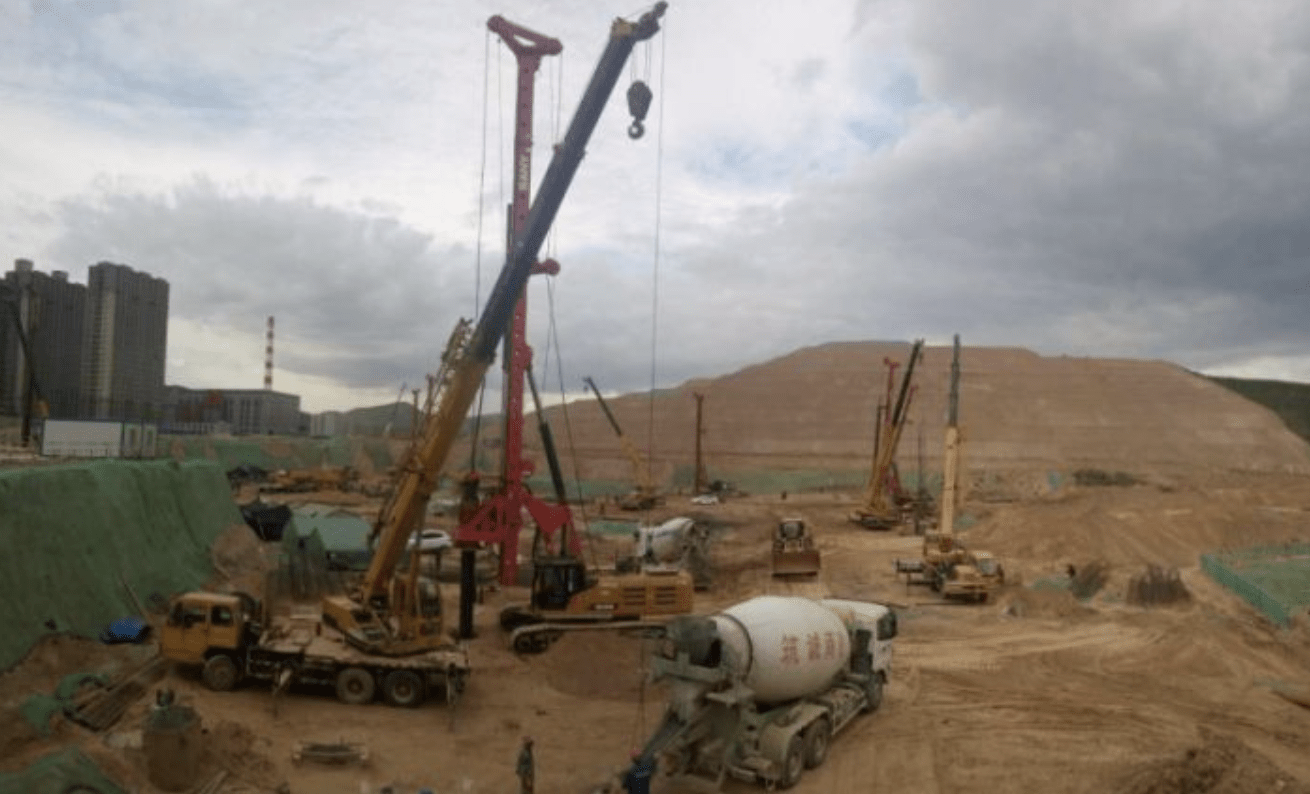
Hydraulic vibratory hammer equipment has been widely used in pile foundation construction, especially for driving and extracting sheet piles. Another significant application of hydraulic vibratory hammers is in pipe pile installation, particularly for driving various steel pipe piles. These hammers are often paired with rotary drilling rigs to facilitate full casing construction and secant pile wall construction.
In developed countries and some Middle Eastern nations, slurry-supported bored piles are prohibited in drilled shaft construction. As a result, full casing methods are commonly employed when using rotary drilling rigs. With increasing environmental regulations and stricter quality control in China, the full casing method is gaining popularity, leading to more frequent use of hydraulic vibratory hammers alongside rotary drilling rigs in pile foundation projects.
Types of Pile Foundations
1. Drilled Shafts (Bored Piles)
In pile foundation engineering, piles are generally categorized into drilled shafts (bored piles) and precast piles. In China, drilled shafts account for approximately 70-80% of all pile foundations. These are constructed using either rotary drilling rigs or direct/reverse circulation drills.
While slurry-supported drilling is the conventional method in China, it is banned in many developed countries. Instead, the full casing method (Benoto method) is preferred in regions with strict environmental and quality standards.
2. Precast Piles
Precast piles, including steel pipe piles and concrete piles, are driven into the ground using vibratory hammers or impact hammers. Hydraulic vibratory hammers are particularly effective for steel pipe pile installation due to their high-frequency vibration, which reduces soil resistance.
Casing Methods in Rotary Drilling
Role of Casing in Drilled Shafts
During rotary drilling, temporary casing is often used to stabilize the borehole. The primary functions of casing include:
-
Accurate positioning and hole guidance
-
Protecting the hole opening from collapsing
-
Preventing surface debris from falling into the borehole
-
Isolating groundwater to maintain slurry pressure
-
Controlling pile top elevation
-
Preventing sediment reflux during drilling
Methods for Installing and Extracting Casing
(1) Rotary Drill Rig’s Kelly Bar Pressure Method
For shallow casings (typically <10m), the rotary drill rig’s own weight and crowd force can be used to drive the casing.
(2) Casing Oscillator (Casing Driver) Method
For casings exceeding 10m or where high verticality is required, a casing oscillator is often used. Major international brands like Bauer, Soilmec, and Casagrande offer rotary drill rigs with optional casing oscillators. In China, manufacturers such as Sunward and King Tie also provide compatible oscillators.
Limitations of Casing Oscillators:
-
Limited torque capacity (For every 10cm increase in hole diameter, an additional 100 ton-metersof torque is required)
-
Difficulty in hard strata
-
Challenges in casing extraction
(3) Excavator-Mounted Hammer Method
For shorter casings (<10m), an excavator-mounted hammer can be used.
(4) Vibratory Hammer & Casing Rotator Method
In challenging ground conditions such as:
-
Soft silt/clay layers
-
Loose sandy soils
-
High groundwater levels
-
Karst formations
The full casing method (Benoto method) is often employed.
The Benoto (Full Casing) Method
Process Overview
-
Casing Installation: A vibratory hammer or casing rotator drives the steel casing while the rotary drill rig excavates inside.
-
Soil Removal: A clamshell bucket extracts soil within the casing.
-
Pile Construction: After reaching the bearing stratum, reinforcement cages are placed, and concrete is poured.
Advantages of the Benoto Method
✅ Superior Environmental Performance – Low noise, minimal vibration, no slurry pollution.
✅ High-Quality Piles – No risk of borehole collapse, better concrete integrity, reduced overbreak.
✅ Suitable for Urban Construction – Effective in reclaimed land with debris (bricks, concrete blocks).
✅ Avoids Common Defects – Minimizes risks of necking, pile breakage, and concrete segregation.
Equipment for Full Casing Construction
(1) Casing Rotators (Benoto Rigs)
Originally developed in France in the 1950s, these machines are now widely used in Japan, Europe, and Hong Kong (where they account for 45% of drilled shafts). In China, manufacturers like Sany and Beijing Institute of Exploration Engineering have developed domestic versions, but adoption remains limited due to high costs.
(2) Hydraulic Vibratory Hammers
-
Best for: Soft soils, loose fills, sandy layers, and water-bearing strata.
-
Installation Method: A crane or excavator suspends the vibratory hammer, which liquefies the surrounding soil via high-frequency vibration, allowing easy casing penetration.
Advantages of Hydraulic Vibratory Hammers:
✔ Versatility – Can be mounted on cranes, rotary drills, or piling rigs.
✔ Fast Installation/Extraction – Reduces project timelines.
✔ Lower Operating Costs – No need for slurry, minimal equipment modifications.
✔ Strong Extraction Capability – Even 6m+ casings can be extracted efficiently.
✔ Adaptability – Dual-hammer setups (e.g., ICE Vibro hammers) can double the extraction force.
Future Trends in China
With increasing emphasis on environmental protection, safety, and quality, the full casing method is expected to grow in adoption. Hydraulic vibratory hammers, with their flexibility, efficiency, and cost-effectiveness, will play a crucial role in modern piling construction.
For challenging geological conditions, such as Karst formations and coastal urban projects, hydraulic vibratory hammers paired with rotary drilling rigs offer a reliable, high-performance solution.