
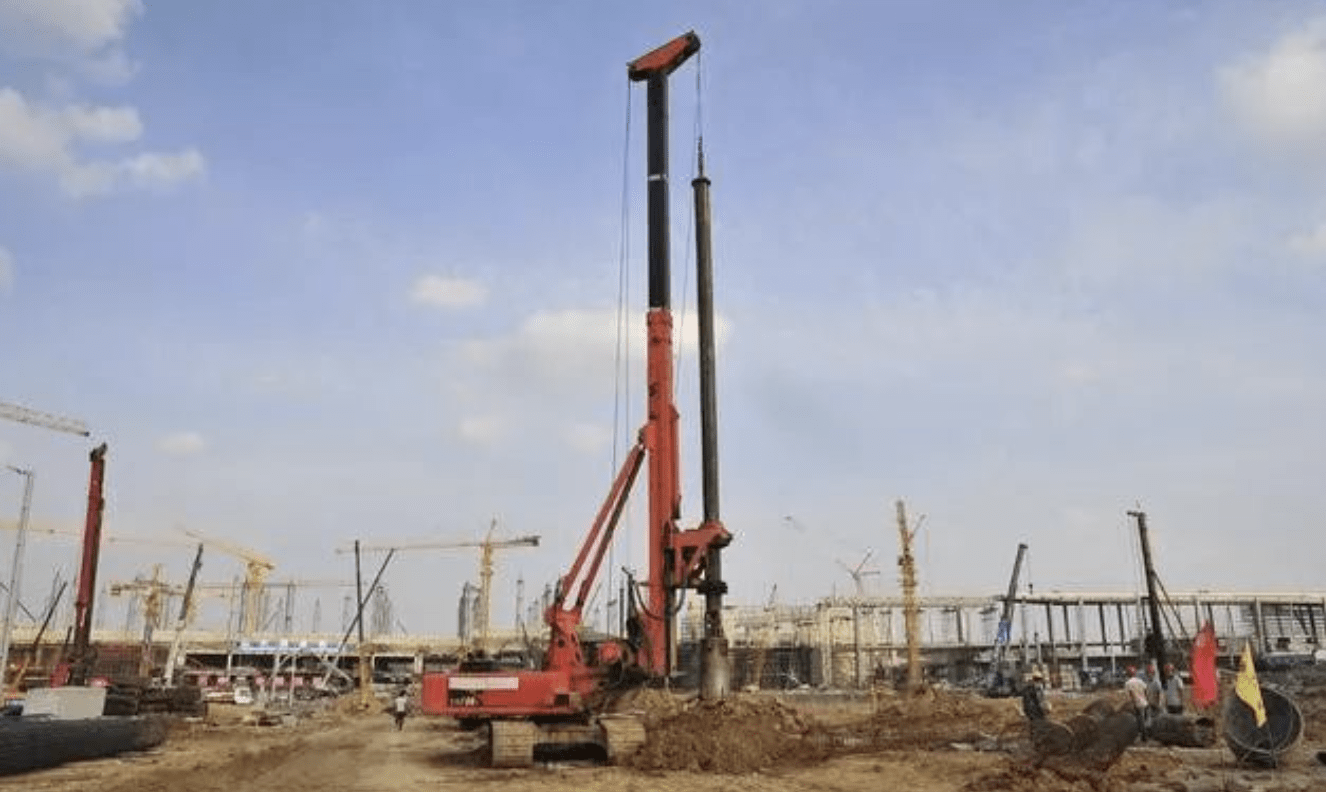
Purpose of Pile Foundation Testing
-
Single Pile Vertical Compression Static Load Test: Determines the ultimate vertical compressive bearing capacity of a single pile and verifies whether the vertical compressive capacity meets design requirements. It measures pile shaft stress and deformation to assess side friction and end bearing resistance while validating high-strain dynamic testing results.
-
Single Pile Vertical Uplift Static Load Test: Establishes the ultimate vertical uplift bearing capacity and confirms if uplift resistance satisfies design specifications. Through pile shaft stress and deformation measurements, it evaluates uplift friction resistance.
-
Low Strain Integrity Testing: Assesses pile integrity by detecting defects and their locations while qualitatively determining severity levels.
Pile Testing Methods
-
Single pile vertical compression static load test
-
Single pile vertical uplift static load test
-
Single pile horizontal static load test
-
Core drilling method
-
Low-strain method
-
High-strain method
-
Sonic echo testing
Selection Criteria for Test Piles
-
Piles with suspected construction quality issues
-
Piles deemed critical by designers
-
Piles in areas with abnormal geological conditions
-
Piles constructed using different techniques
-
For bearing capacity verification, include an appropriate number of Class III piles identified in integrity testing
-
Other than the above cases, test piles should be randomly and evenly distributed among the same pile type
Testing Quantity Requirements
-
Vertical Compression Static Load Test: Minimum 1% of total piles or 3 piles (whichever is greater). For projects with ≤50 piles, test at least 2 piles.
-
Vertical Uplift Static Load Test: Minimum 1% of total piles or 3 piles (whichever is greater).
-
Low Strain Integrity Testing: Required for all working piles.
Static Load Test Termination Criteria
5.1 Vertical Compression Test Stop Conditions
-
When settlement under a load level exceeds 5 times that of the previous level (if settlement stabilizes with total settlement <40mm, continue loading until >40mm)
-
Settlement under a load level exceeds 2 times the previous level without stabilization within 24 hours
-
Achieving the design-specified maximum load
-
When using working piles as reaction piles, if their uplift reaches allowable limits
-
For gradual load-settlement curves, continue loading until 60-80mm total settlement (exceptionally >80mm if required)
5.2 Vertical Uplift Test Stop Conditions
-
Uplift under a load level exceeds 5 times the previous level
-
Cumulative uplift exceeds 100mm
-
Uplift load reaches 0.9 times the steel reinforcement yield strength
-
For acceptance testing, achieving the design-specified maximum uplift load
Low Strain Integrity Testing
6.1 Reflection Wave Method Principle
Stress waves generated at the pile head propagate downward. When encountering discontinuities (voids, cracks, soil inclusions) or the pile toe, reflected waves return. Analyzing wave travel time, amplitude, and waveform characteristics determines pile integrity.
6.2 Pile Head Preparation
-
Remove surface laitance
-
Grind to a smooth finish
-
Ensure a clean, dry surface
6.3 Pile Integrity Classification
-
Class I: Intact pile
-
Class II: Minor defects without structural impact
-
Class III: Significant defects affecting capacity
-
Class IV: Critical defects
Defective Pile Treatment Methods
8.1 General Treatment Principles
-
Prerequisites:
-
Understand defect nature and extent
-
Define clear objectives with preliminary solutions
-
Obtain stakeholder consensus and design approval
-
-
Solution Requirements:
-
Safety, cost-effectiveness, and efficiency
-
Preventive measures for unaffected sections
-
-
Timeliness:
-
Verify embedment depth, rock strength, sediment thickness, and verticality before concreting
-
Review all pile records before excavation
-
-
Impact Assessment:
-
Consider the effects on completed work and subsequent construction
-
-
Optimal Solution Selection:
-
Compare alternatives for safety, economy, and constructability
-
8.2 Common Treatment Methods
-
Enlarged Pile Cap:
-
For excessive pile deviations or insufficient single pile capacity
-
Increase the cap dimensions and reinforcement
-
-
Pile Reconstruction:
-
Complete removal and replacement of defective piles
-
Effective but costly and time-consuming
-
-
Pile Extension:
-
Expose the pile head, clean the reinforcement, and cast new concrete to the required elevation
-
Alternative: Embedded connection for concreting interruptions
-
-
Supplemental Piling:
-
Add piles between existing ones if spacing permits
-
-
Grouting Reinforcement:
-
For voids, honeycombing, or insufficient length
-
High-pressure grouting below defects or to design depth
-
-
Construction Method Modification:
-
Adjust sequencing (e.g., alternate pile installation)
-
Change techniques (e.g., cased drilling in watery conditions)
-
-
Design Revision:
-
Alter the pile type or location
-
Reduce structural loads if remediation proves impractical
-
This comprehensive guide to pile foundation testing covers all critical aspects from evaluation methods to defect remediation, providing essential information for construction professionals and quality assurance specialists. Proper implementation of these procedures ensures structural safety and long-term performance of deep foundation systems.