Working Conditions for Piling Construction
-
Site Preparation
-
Complete geological data and approved piling design drawings are available.
-
The piling construction plan has been reviewed and approved.
-
Overhead, ground, and underground obstacles within the piling area have been cleared.
-
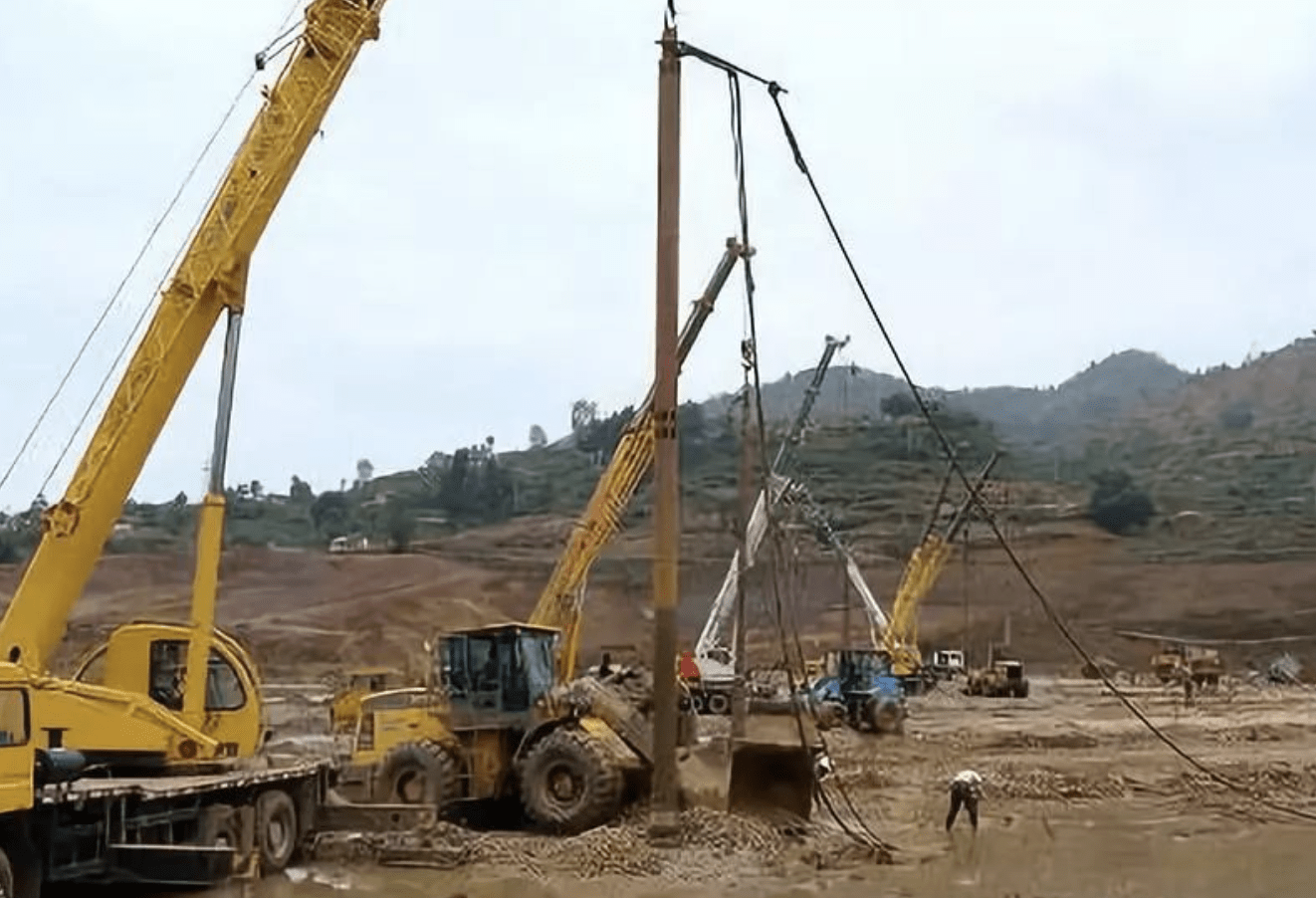
The site is leveled and compacted to ensure smooth operation of piling machinery. Drainage measures are in place for rainy seasons.
-
-
Vibration Control
-
Vibration isolation measures are implemented for nearby structures if necessary.
-
-
Survey and Marking
-
Piling axis and benchmark control points have been established and verified.
-
Pile positions are marked using wooden stakes, short rebars, or lime powder.
-
-
Equipment and Material Readiness
-
Piling equipment access routes and construction sequences are determined.
-
Piles (e.g., precast pipes, bored piles) are inspected for quality, with defective ones marked and removed.
-
Machinery, lifting tools, water, and power lines are checked and installed.
-
-
Test Piling
-
Test piles are required for pipe piles and rotary bored piles (minimum 2 piles).
-
For manual excavation piles, test digging is conducted only under complex geological conditions or if specified by design.
-
Key Quality Control Points in Construction
1. Hole Formation
-
Install a steel casing (6–8 mm thick, 200 mm wider than the drill bit) at the hole opening (depth: 1.2–1.5 m).
-
Use crushed stone and clay slurry to stabilize the hole wall.
-
Maintain proper slurry density and impact depth per specifications.
2. Slurry Management
-
Self-check slurry materials and quality.
-
Measure and adjust slurry density regularly.
-
Remove debris every 1–2 m of drilling.
-
Continuously replenish the slurry to prevent collapse.
3. Verticality Control
-
Check hole verticality every 1–2 m; correct deviations immediately.
4. Hole Cleaning
-
After reaching design depth, clean the hole and adjust slurry density to 1.15–1.25.
5. Reinforcement Cage Installation
-
Place the rebar cage and secure it to the casing to prevent floating or sinking.
-
Pour concrete immediately to avoid sedimentation or collapse.
6. Underwater Concrete Pouring (Tremie Method)
-
6.1 Pipe Selection & Testing
-
Use leak-proof pipes (test pressure: 0.6–1.0 MPa).
-
-
6.2 Pipe Installation
-
Extend pipes 1–7 m per section, keeping embedment depth at 2–4 m (never <2 m or >6 m).
-
-
6.3 Continuous Pouring
-
Complete pouring within 3 hours (before initial setting).
-
Monitor concrete rise and pipe embedment depth.
-
Initial concrete drop: 300–500 mm above hole bottom; embedment >0.8 m after first pour.
-
-
6.4 Supervision
-
Engineers must oversee and rectify issues promptly.
-
Quality Standards & Inspection Methods
-
Slurry Preparation
-
Test materials and slurry quality; conduct third-party tests if needed.
-
-
Rebar Cage Fabrication
-
Verify steel certifications, dimensions, and construction quality.
-
-
Concrete Strength & Hole Depth
-
Ensure compliance with design specs.
-
Measure sediment thickness; re-clean if excessive.
-
-
Post-Pouring Checks
-
Verify pile head elevation, rebar position, and excess slurry removal.
-
-
Tolerances & Testing
-
Follow design/standard tolerances.
-
Third-party tests are mandatory for final approval.
-
Pile Integrity Testing & Acceptance
-
Testing Methods
-
Core Drilling: For concrete quality and sediment checks.
-
Low-Strain Testing (≤15 m piles): 10% of piles + crosshole sonic logging.
-
Ultrasonic Testing (>15 m piles): Detects defects and integrity.
-
Sonar Tube Requirements:
-
2 tubes (D≤800 mm), 3 tubes (800<D≤2000 mm), 4 tubes (D>2000 mm).
-
-
-
Static Load Test (Precast Piles)
-
Conduct after installation.
-
-
Acceptance Process
-
Test after 28-day curing.
-
Approval by监理, contractors, designers, and project teams before proceeding.
-
Protection Measures
-
Marking & Excavation
-
Protect survey markers from displacement.
-
Follow excavation plans to prevent pile tilting.
-
-
Completed Piles
-
Guard against vehicle damage with barriers/signage.
-
Shield rebar from bending/breaking.
-
-
Concrete Curing
-
Cover pile heads to prevent cracking.
-
Avoid adjacent pile drilling during fresh concrete curing.
-
Common Quality Issues
-
Hole Collapse – Low slurry levels or density.
-
Rebar Cage Issues – Deformation, poor welding, or floating during pouring.
-
Concrete Defects – Soil contamination, necking, voids, or weak strength.
-
Sediment Buildup – Inadequate cleaning.
-
Misalignment – Poor position control.
-
Manual Excavation Risks – Unchecked verticality, groundwater seepage, unsafe rebar work.
Conclusion
Strict adherence to procedures, real-time monitoring, and thorough testing ensure piling quality and structural safety. Proper planning and risk mitigation prevent common failures, ensuring compliance with design and regulatory standards.