
Introduction
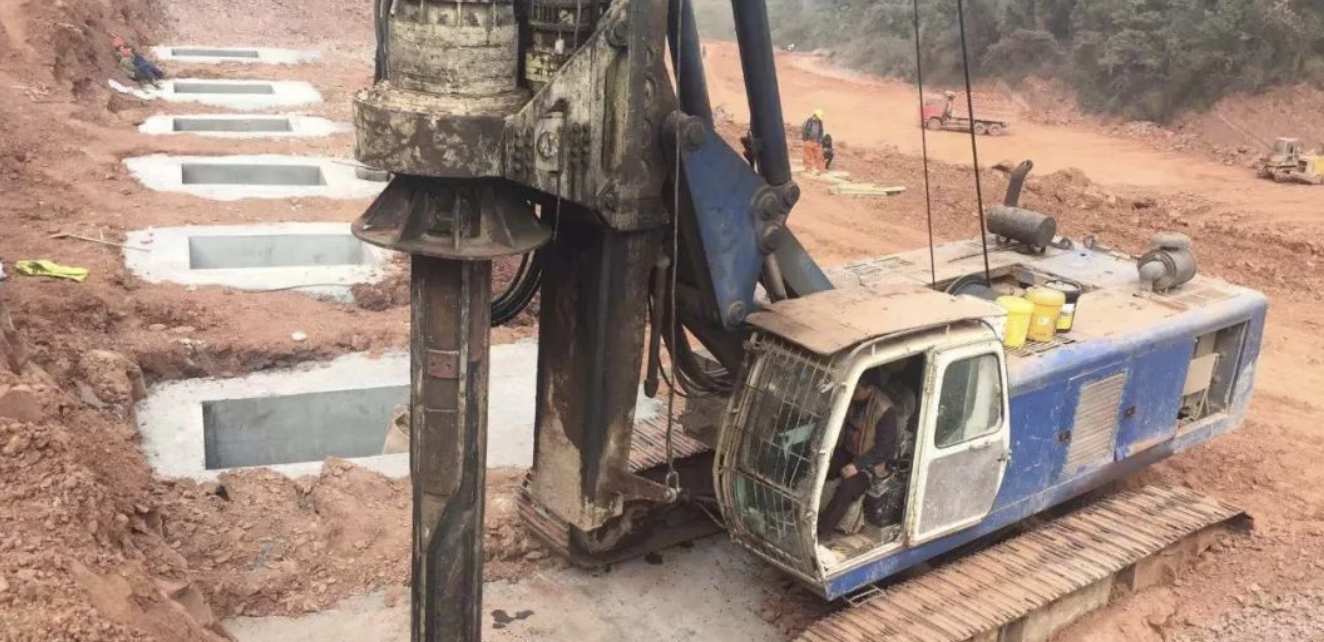
A recent incident in Shenzhen, where a metro tunnel was punctured by a piling machine, causing severe damage to a passing train, has brought attention to the importance of understanding piling machinery. This article explores various types of piling machines, their working principles, and applications in construction.
1. Auger (Spiral) Piling Machine
Components:
-
Power head
-
Drill rod
-
Column
-
Hydraulic walking chassis
-
Rotary structure
-
Winch
-
Control cabin
-
Electrical system
-
Hydraulic system
-
Towing mechanism
Working Principle:
Operated via a hydraulic system, the machine performs walking, rotation, column lifting, and positioning. The power head drives the drill rod and bit, while the winch controls the lifting of drilling tools. The excavated soil is transported to the surface via spiral blades. Once the desired depth is reached, the drill is lifted to form a hole. Depending on construction requirements, concrete or slurry can be injected during extraction to form a pile.
2. Diesel Hammer Piling Machine
Structure:
Consists of a cylinder and plunger, functioning similarly to a single-cylinder two-stroke diesel engine.
Working Principle:
Uses the explosive force of atomized diesel under high pressure and temperature to drive the hammer.
Types:
-
Guide Rod Type: Fixed piston with a moving cylinder (less common due to lower efficiency).
-
Cylinder Type: Uses a reciprocating piston (impact body) for hammering (most widely used).
Modern diesel hammers feature four throttle settings (1 being the lowest, 4 the highest), with settings 2-3 typically used for optimal control and energy estimation.
3. Drainage Plate Installer (Plugboard Machine)
Applications:
Primarily used in soft ground treatment and land reclamation projects.
Working Principle:
The machine positions itself, and a vibratory hammer drives the casing into the ground. A drainage plate, connected to an anchor shoe, is inserted to the required depth. After retracting the casing, the anchor shoe and drainage plate remain embedded.
Advantages:
Essential for stabilizing weak foundations in coastal construction.
4. Vibratory Pile Hammer
Working Principle:
Generates powerful vibrations via rotating eccentric weights driven by an electric motor. The horizontal forces cancel out, while vertical forces combine to drive piles into the ground.
Applications:
-
Used with pile frames for sinking concrete piles, stone columns, and steel piles.
-
Ideal for highways, bridges, airports, and building foundations.
Future Trends:
High-power models (60, 75, 90) are replacing older, noisier versions, especially in vibratory sinking applications.
5. Rotary Drilling Rig
Features:
-
Hydraulic crawler chassis
-
Foldable mast
-
Extendable drill pipe
-
Automatic verticality adjustment
-
Digital depth display
Applications:
Suitable for sandy, clayey, and silty soils in:
-
Foundation reinforcement
-
Diaphragm walls
-
Large-diameter piles (1.5–4m diameter, 60–90m depth)
Versatility:
Can be equipped with different tools for dry (short auger) or wet (bucket) drilling, as well as rock coring.
6. DTH (Down-the-Hole) Drill Rig
Principle:
The hammer operates inside the hole, minimizing energy loss from drill rod transmission.
Advancements:
-
GPS-assisted auto-positioning
-
Improved automation and safety
-
Eco-friendly designs
Applications:
Surface and underground drilling in mining and construction.
7. Horizontal Directional Drill (HDD)
Uses:
Installs underground utilities (pipelines, cables) without surface excavation.
Advantages:
-
Fast, precise, cost-effective
-
Works in sand, clay, and gravel
Industries:
Water, gas, electricity, telecom, and oil pipeline construction.
8. Direct & Reverse Circulation Drill
Working Principle:
Uses a mud pump to extract cuttings from the borehole.
Benefits:
-
Low noise
-
Ideal for metro and high-rise foundation pits
9. Impact Drill Rig
Applications:
Effective in challenging geology, especially gravel layers.
Advantages:
-
Reinforces borehole walls
-
Enhances load-bearing capacity
10. Vibro Stone Column Machine
Method:
Replaces traditional stone columns with vibratory compaction.
Process:
A vibrating hammer drives a casing into the ground, followed by concrete injection while extracting the tube.
Machine Types:
-
Pipe-walking
-
Step-type
-
Crawler-mounted
Advantages:
-
Cost-efficient
-
Fast, eco-friendly
-
Widely used in soft soil stabilization
Conclusion
From diesel hammers to high-tech directional drills, piling machines play a crucial role in modern construction. Understanding their functions helps optimize foundation work, ensuring safety and efficiency in projects ranging from metro tunnels to high-rise buildings. As technology advances, automation and eco-friendly designs will further revolutionize the industry.