
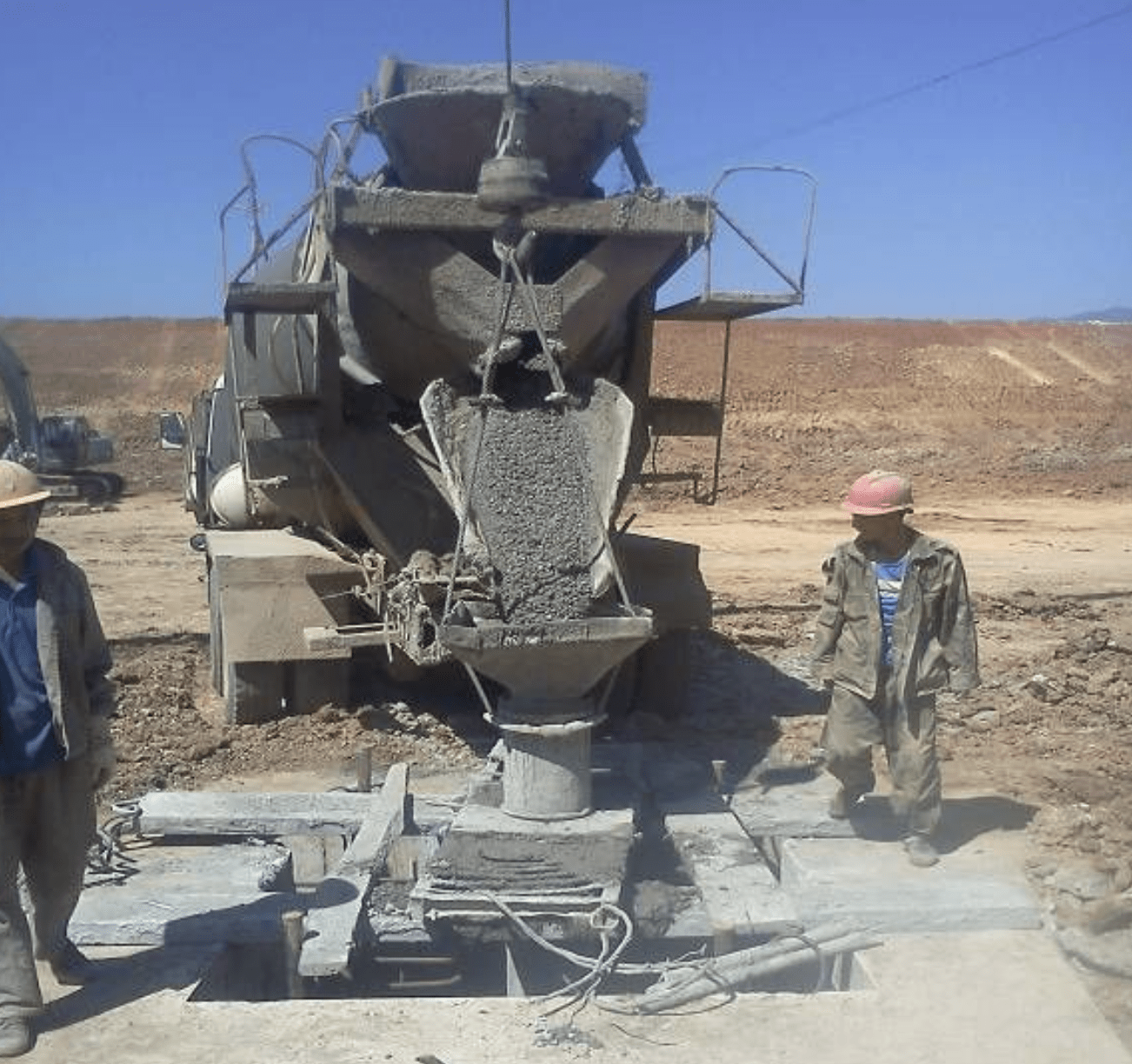
Introduction
Expanded base piles are a type of cast-in-place pile designed to enhance single-pile bearing capacity by enlarging the pile tip or shaft, thereby increasing end-bearing resistance and side friction. This article explores the classification, construction process, common quality issues, and control measures for expanded base piles, ensuring compliance with industry standards and optimizing performance.
Classification of Expanded Base Piles
1. Jianxin Piles
Unlike conventional bored piles, Jianxin piles involve:
-
Placing a hammer inside the casing to compact a stone plug at the bottom.
-
Using friction between the stone plug and casing to drive the plug out.
-
Pouring dry-mix concrete into the pile tube, hammering to form an expanded pile head.
-
Installing reinforcement cages and pouring high-slump concrete.
-
Removing the casing and using vibrators to densify the pile concrete.
2. End-Expanded Piles
These rely primarily on the enlarged tip for load-bearing, supplemented by side friction. Key features include:
-
Using an internal hammer pipe to transfer impact force directly to the pile tip.
-
Compacting concrete to form a flat-bottomed, enlarged tip.
-
Increasing end-bearing area and improving soil density.
Construction Procedure
-
Site Preparation – Mark pile locations and place precast concrete tips or dry-mix concrete.
-
Pile Rig Setup – Align outer and inner hammer pipes.
-
Driving – Hammer the outer pipe to the designed depth.
-
Concrete Pouring – Withdraw the inner pipe, remove the reinforcement collar, and pour concrete (height hm).
-
Lifting & Compacting – Raise the outer pipe by *h* meters, then hammer concrete out to form the expanded base.
-
Final Pouring – Fill the pile shaft with concrete, place reinforcement (if needed), and compact while extracting the casing.
Common Quality Issues & Solutions
1. Insufficient or Excessive Base Expansion
Causes:
-
Discrepancies in geological data.
-
Improper concrete volume during compaction.
-
Incorrect lifting height (*h*).
Solutions:
-
Conduct trial compactions for verification.
-
Strictly control the concrete volume and lifting height.
-
Ensure synchronous sinking of inner and outer pipes (~0.3m).
2. Necking (Reduced Pile Diameter)
Causes:
-
Soil interference in soft clay layers.
-
High pore water pressure in saturated clay.
-
Poor concrete workability or adjacent pile interference.
Solutions:
-
Maintain a slump (8–10cm) and slow extraction speed.
-
Use “jump pouring” for closely spaced piles.
-
Allow 7-day curing between batches to prevent negative friction.
3. Pile Fracture
Causes:
-
Rapid pipe extraction.
-
Shear stress from uneven soil layers.
-
Large aggregate bridging or delayed pouring.
Solutions:
-
Limit extraction speed (0.5 m/min in soft clay).
-
Use aggregates ≤3cm and ensure continuous pouring.
-
Apply “re-driving” for interrupted pours.
4. Reinforcement Cage Elevation Errors
Causes:
-
Inaccurate placement or soil variation during extraction.
Solutions:
-
Pre-mark lifting ropes and adjust for systematic errors.
-
Allow vibration-induced settling for precise positioning.
5. Water/Mud Infiltration
Solutions:
-
Seal casing bottoms with hemp rope or cardboard.
-
Optimize driving speed to minimize exposure.
Quality Management
Key Standards
-
Technical Code for Building Pile Foundations (JGJ94-94)
-
Design Specification for Composite Expanded Base Piles (JGJ/T135-2001)
-
Code for Design of Building Foundations (GB50007-2002)
Construction Controls
-
Machine Setup – Level the rig and align the casing vertically.
-
Driving – Monitor depth and avoid deviation.
-
Compaction – Adjust filler volume per soil type.
-
Concrete – Use stiff-mix concrete (0.3m³, slump ≤5cm).
-
Testing – Check slump (10–14cm), aggregate quality (≤3% silt), and reinforcement tolerances (±10mm spacing).
Allowable Deviations
-
Diameter: -20mm
-
Verticality: ≤1%
-
Location: 70–150mm
-
Elevation: ±50mm
Seasonal Measures
-
Rainy Season – Secure materials, ensure drainage, and protect equipment from lightning.
Conclusion
Expanded base piles offer superior load-bearing capacity but require stringent quality control. By adhering to standardized procedures, monitoring material properties, and implementing corrective measures, contractors can mitigate risks like necking, fractures, and elevation errors, ensuring durable and high-performance foundations.