I: Working Principle and Application Scope
Mud Retaining Wall Pile Construction
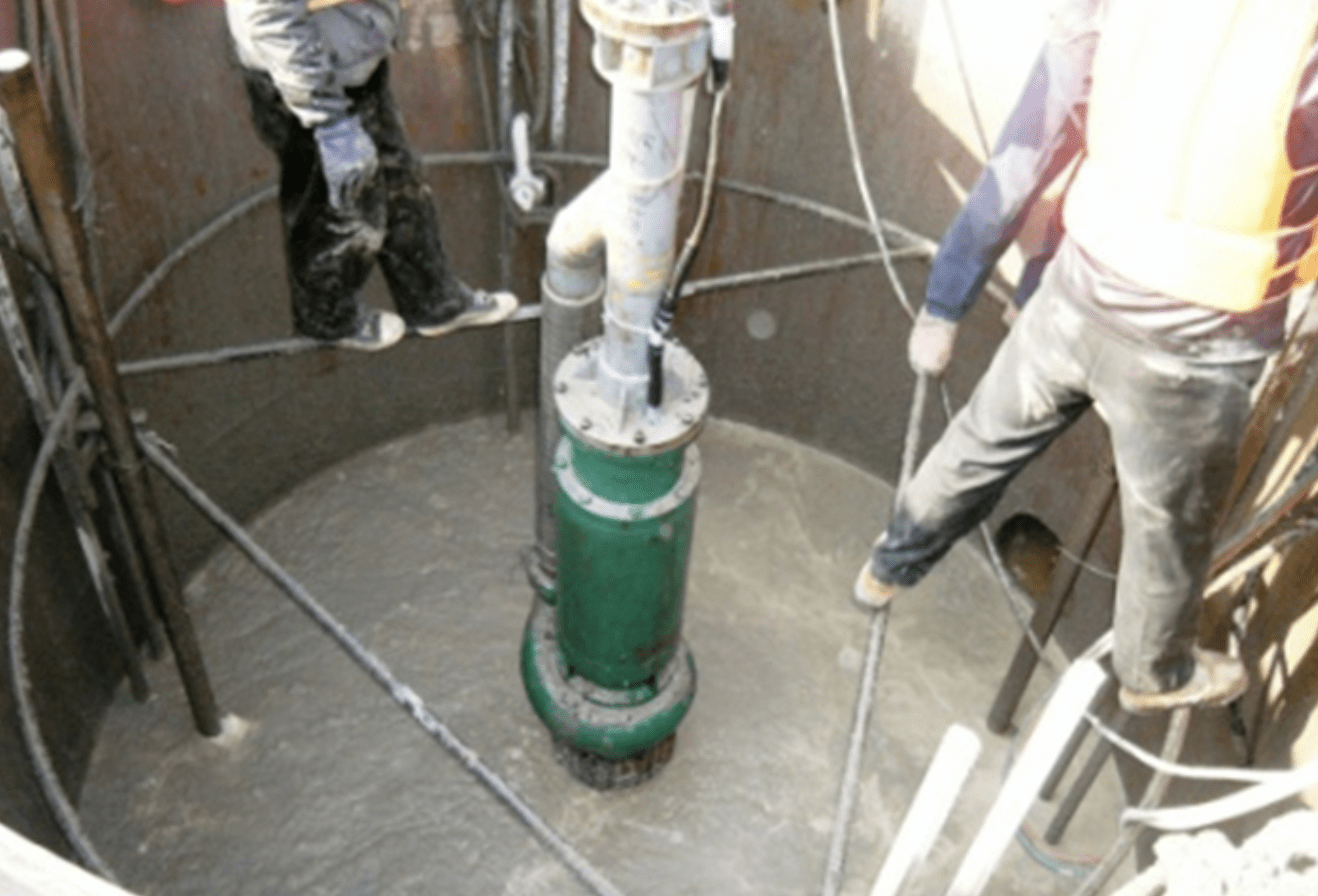
Mud retaining wall pile construction involves drilling holes using specialized machinery while using slurry to stabilize the borehole walls and remove excavated soil. Common methods include:
-
Direct Circulation Drilling
-
Reverse Circulation Drilling
-
Impact Drilling
-
Rotary Drilling
Functions of Slurry:
-
Stabilizes borehole walls to prevent collapse.
-
Removes excavated soil.
-
Cools and lubricates the drill bit.
The slurry is typically specially prepared, though in clayey soils, it can be self-generated from the drilled material.
(1) Direct & Reverse Circulation Drilling
Direct Circulation:
-
Slurry flows from the slurry pit → pump → drill pipe → drill bit → borehole.
-
The slurry carries cuttings to the surface, where they settle before being recirculated.
Reverse Circulation:
-
Slurry flows from the borehole → drill pipe → pump → settling pit, → back to the borehole.
-
More efficient for deeper holes (up to 100m) and larger diameters (up to 5m).
Applications:
-
Direct Circulation: Best for fine-grained soils (clay, silt), limited to 30–40m depth.
-
Reverse Circulation: Suitable for soft soils, sand, gravel, and weathered rock.
(2) Impact Drilling
-
Uses a heavy, chisel-shaped drill bit dropped repeatedly to break rock/soil.
-
Cuttings are removed via a bailer or reverse circulation.
-
Ideal for gravel, boulders, and hard rock layers where rotary methods fail.
-
Common drill bits: Cross-shaped, I-shaped, circular, or tubular.
II. Construction Process & Quality Control
(1) Construction Process
1. Pile Positioning
-
Survey and mark pile locations with ≤10mm deviation.
-
Use cross-referenced wooden stakes for accuracy.
2. Installing the Casing (Guide Tube)
-
Made of 4–8mm steel, 100mm larger than the drill diameter.
-
Prevents collapse, maintains slurry level, and ensures verticality (≤5‰ tilt).
-
Depth requirements:
-
Clay: ≥1.0m
-
Sandy soil: ≥1.5m
-
-
The top of the casing must be 0.4–0.6m above ground and 1.0m above groundwater.
3. Rig Setup
-
Align the drill center with the pile position (≤20mm deviation).
-
Ensure verticality <1% and stabilize the rig on soft ground.
4. Drilling
-
Select a method based on soil type:
-
Impact drilling for boulders/hard rock.
-
Rotary drilling for cohesive soils.
-
5. Hole Cleaning
-
Remove sediment to meet standards:
-
End-bearing piles: ≤50mm
-
Friction piles: ≤100mm
-
Tension/lateral-force piles: ≤200mm
-
-
Use slurry with a specific gravity of <1.25 and sand content ≤8%.
6. Reinforcing Cage Installation
-
Fabricate with welded stirrups and spacer blocks (every 5–6m).
-
Lower slowly to avoid damaging the borehole walls.
7. Concrete Pouring (Underwater)
-
Slump: 180–220mm
-
Cement content: ≥360kg/m³
-
Sand ratio: 40–50%
-
Tremie method:
-
Initial concrete must cover the pipe (≥0.8m embedment).
-
Maintain 2–6m embedment depth during pouring.
-
Overpour 0.8–1.0m to remove the weak surface layer.
-
(2) Quality Control
Impact Drilling Key Points:
-
Use auto-rotating drill bits to ensure round holes.
-
Start with low-impact frequency in soft soils.
-
Inspect every 4–5m and after big changes.
-
Clean hole every 300–500mm in non-bearing layers, 100–300mm in bearing layers.
-
Handle slurry waste properly to avoid pollution.
III. Common Issues & Solutions
1. Borehole Collapse
-
Causes: Weak soil layers (sand, silt) or slurry loss in karst regions.
-
Solution: Increase slurry viscosity, add clay/rock chips, or redrill.
2. Deviation (Off-Vertical Holes)
-
Causes: Uneven strata, rig instability, or rapid drilling.
-
Solution: Reposition the rig, use low-impact correction, or backfill and redrill.
3. Excessive Sediment
-
Causes: Poor cleaning, long delays, or improper concrete flow.
-
Solution:
-
Optimize slurry viscosity.
-
Keep 30–50cm between the tremie pipe and the hole bottom.
-
Use reverse circulation for deep piles (>35m).
-
4. Soil Inclusions (Weak Layers)
-
Causes: Slurry mixing with concrete due to low embedment depth.
-
Solution: Maintain 2–4m tremie embedment during pouring.
5. Sand Boiling
-
Causes: External water pressure > internal pressure.
-
Solution: Add clay/gravel to stabilize the hole.
6. Broken Piles
-
Causes: The Tremie pipe was lifted too high, causing segregation.
-
Solution: Ensure continuous pouring and proper pipe embedment.
IV. Safety Management
-
Equipment: Use certified machinery with proper grounding (R ≤4Ω).
-
Slurry Pits: Cover unused pits; mark active ones to prevent falls.
-
Rig Stability: Secure with timber supports to prevent tilting.
-
Casing Safety: Keep clear of the casing edge to avoid falls.
-
Crane Operations: Restrict access under the boom.
-
Rock Drilling: Monitor vibrations to prevent rig overturning.
-
Concrete Work: Wear helmets during pipe assembly; no overhead work.
-
Open Holes: Cover when unattended to prevent tool drops.