
Introduction
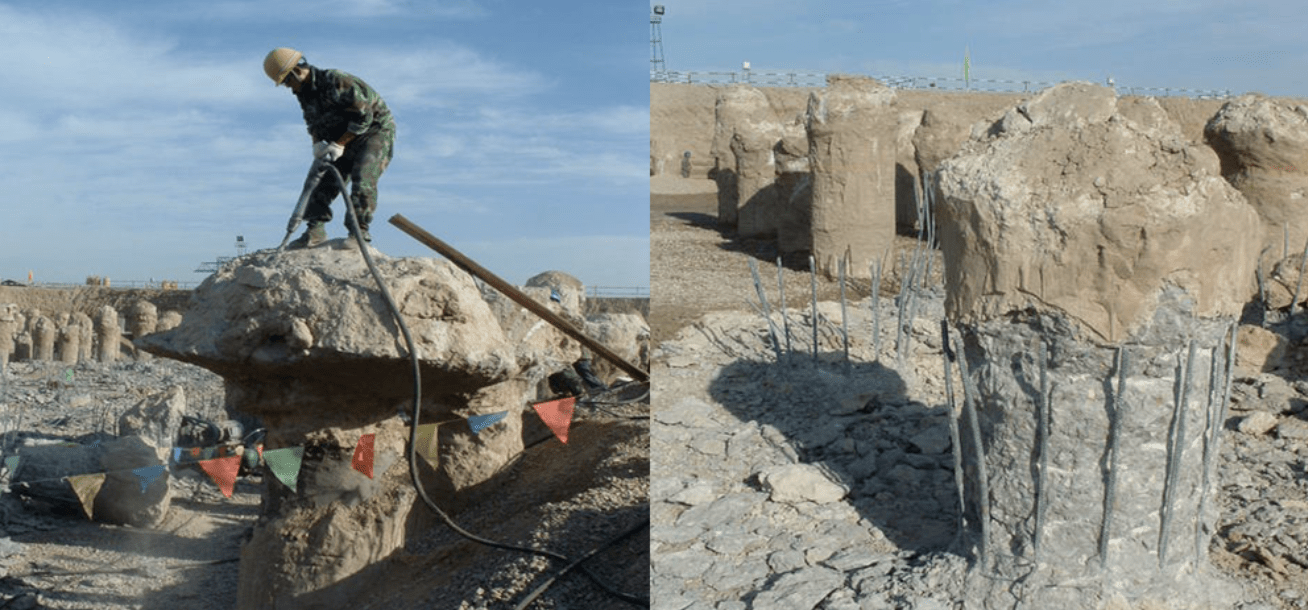
Pile foundations are one of the most commonly used structural foundations in engineering. The integrity of the pile body and its load-bearing capacity directly affect the stability of the superstructure. Therefore, quality testing of pile foundations is crucial.
Common Pile Testing Methods
Several techniques are employed to evaluate pile integrity and performance:
-
Ultrasonic Crosshole Testing (UCT) – Assesses concrete density and pile integrity.
-
Static Load Test (SLT) – The most direct and reliable method for evaluating vertical compressive bearing capacity.
-
Core Drilling Method – Provides scientific, intuitive, and practical evaluation, widely used for concrete cast-in-place piles.
-
Low Strain Integrity Testing (Reflection Wave Method) – Primarily detects pile integrity.
-
High Strain Dynamic Testing (HSDT) – Determines whether the vertical compressive bearing capacity meets design requirements.
1. Ultrasonic Crosshole Testing (UCT)
Ultrasonic Crosshole Testing evaluates the integrity of concrete cast-in-place piles by analyzing changes in acoustic parameters to identify defects.
1.1 Basic Principle
Pre-installed parallel acoustic tubes run along the pile axis. Probes move through these tubes, measuring acoustic parameter variations to detect defects and assess pile integrity.
1.2 Workflow
-
Collect pile foundation data (design specifications, construction records).
-
Measure hole depth and tube spacing.
-
Perform data acquisition (ultrasonic wave transmission analysis).
-
Generate analysis curves (time-amplitude, frequency-depth).
-
Evaluate results and issue a test report.
1.3 On-Site Testing
Instrument Requirements
-
The ultrasonic testing device must:
-
Display real-time waveforms.
-
Support manual/automatic measurement of wave arrival time and amplitude.
-
Include spectral analysis functionality.
-
Have time resolution ≤0.5 μs and amplitude measurement error <5%.
-
Testing Procedure
-
Select transducers based on pile diameter and calibrate the system delay time.
-
Measure tube dimensions (outer/inner diameter, spacing) and create a testing layout diagram.
-
Deploy probes at marked depths, maintaining fixed height differences while synchronizing movement.
-
Record time-history curves of received signals.
-
Capture wave arrival time, peak amplitude, and frequency.
-
-
Conduct preliminary analysis; if anomalies are detected, perform additional scans (dense testing, inclined/sector scanning) to confirm defect location and extent.
1.4 Data Analysis
Key parameters for evaluation:
-
Wave Arrival Time (Acoustic Time)
-
Wave Velocity
-
Amplitude
-
Dominant Frequency
Critical Value Determination
-
Wave Velocity Threshold:
-
Sort data.
-
Eliminate outliers.
-
Calculate statistical criteria.
-
Validate through iterative steps.
-
-
Amplitude Threshold:
-
Critical value = Average amplitude – 6 dB. The values below indicate potential defects.
-
-
Slope Criterion:
-
Product of slope (time-depth curve) and the adjacent point’s acoustic time. Sensitive to defect edges, used alongside time/amplitude criteria.
-
1.5 Pile Integrity Assessment
Integrate all collected data—construction records, field measurements, and acoustic analysis—to evaluate pile integrity and generate a final report.
Conclusion
Ultrasonic Crosshole Testing provides a reliable, non-destructive method for assessing pile integrity. Combined with other techniques like Static Load Tests and Core Drilling, it ensures the structural reliability of foundation systems.
For optimal results, testing should follow standardized protocols with calibrated equipment and thorough data interpretation.