
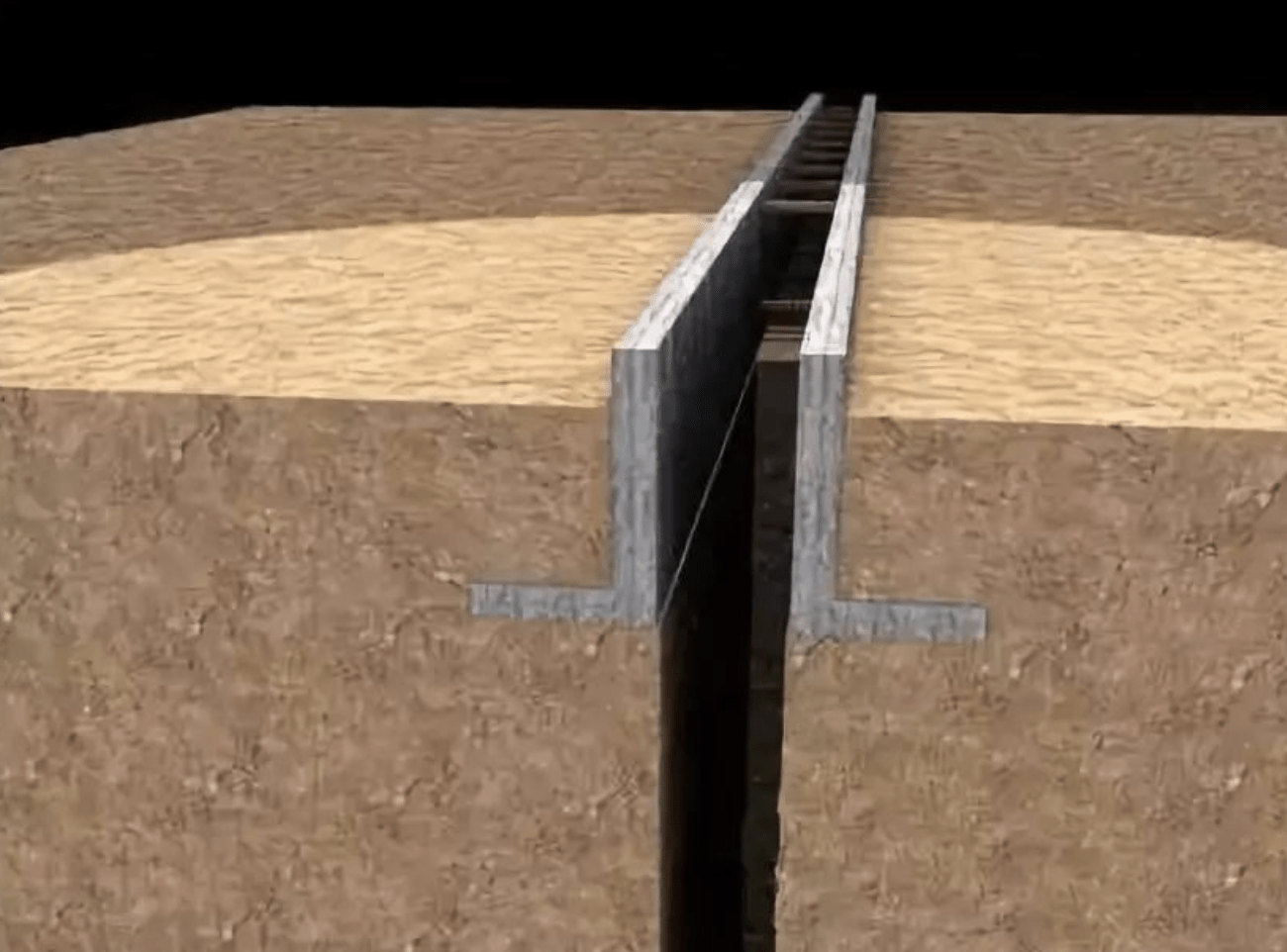
1. Evolution of Diaphragm Wall Technology
The diaphragm wall technique traces its origins to 1938 when Italy conducted pioneering experiments, later implementing a 40-meter-deep cutoff wall in the Santan Malin Dam project. Key milestones include:
-
1958: China’s first pile-type diaphragm walls were constructed at Qingdao Zizikou Reservoir and Beijing Miyun Reservoir
-
1973: France’s Soletanche company developed the first hydraulic trench cutter
-
1974: Shanghai initiated diaphragm wall trials using conventional grab systems
-
1976: Guangdong Province first applied diaphragm walls for building foundation support
-
1996: China introduced BC30 hydraulic trench cutters for the Three Gorges Project
-
2004: Shanghai Metro Line 4 rehabilitation project implemented 1.2 m-thick, 65 m-deep walls
-
Current: Japanese projects achieve depths of 140m, with global applications in high-rise basements, metro stations, and dams
Typical Applications:
-
3-level basements: 14m deep walls (dual-function as permanent walls)
-
4-level basements: 17m deep walls
-
Metro stations: 23m deep walls (serving as anti-floating structures)
2. Multi-Functional Diaphragm Wall Systems
2.1 Construction Process & Equipment
-
Grab-type trenching machines
-
Impact-type cutter heads
-
Hydraulic milling machines
2.2 Technical Advantages
-
High structural rigidity and strength for superior lateral displacement control
-
Advanced joint designs ensure waterproof reliability
-
Low-vibration, quiet operation minimizes neighborhood impact
-
Adaptable to complex geological conditions
-
Space-efficient solution with rapid construction cycles
-
Compatible with top-down construction methods
2.3 Dual-Function as Permanent Basement Walls
Key considerations when using diaphragm walls as permanent structural elements:
-
Wall thickness: Typically >600mm (exceeding conventional basement walls)
-
Reinforcement: Designed for higher lateral earth pressures
-
Deformation control: Must limit cracking to <0.2mm for waterproofing
-
Structural integration:
-
Embedded connectors for slab/wall junctions
-
Reinforcement cages form concealed columns
-
Rough surfaces remedied with 200-300mm interior lining walls
-
Waterproofing Strategies:
-
Preventive measures:
-
Extended I-beam flange connections
-
External swellable waterstops
-
Jet grouting at joints
-
Waterstop plates at the base slabs
-
-
Drainage systems:
-
Cavity drainage membranes
-
Sub-floor collection channels
-
2.4 Combined Foundation/Anti-Float Systems
-
Functions as wide, shallow piles with significant skin friction
-
Deep embedment provides anti-flotation stability
-
Localized deepening addresses capacity deficiencies
-
Requires stricter construction tolerances than temporary walls
3. Case Studies
Project 1: Guangzhou Hospital Complex
-
Scope: 21.1 m-deep excavation for the 19-story hospital with 4 underground levels
-
Challenges: Adjacent to major roads and existing structures in a sensitive urban area
-
Solution:
-
800mm thick diaphragm wall (serving as structure/waterproofing/piles)
-
Single strut + two-tier anchors
-
200mm interior lining wall
-
-
Performance:
-
Maximum deflection: 27.2mm (within limits)
-
6m embedment in weathered rock met all requirements
-
-
Cost Savings: ¥2.502 million
Project 2: Zhujiang New CBD Development
-
Scope: 18.3 m-deep excavation near Metro Line 5
-
Solution:
-
Diaphragm wall with 300mm lining + three-tier struts
-
-
Performance:
-
Maximum deflection: 21.6mm
-
5-6m rock embedment
-
-
Cost Savings: ¥1.648 million
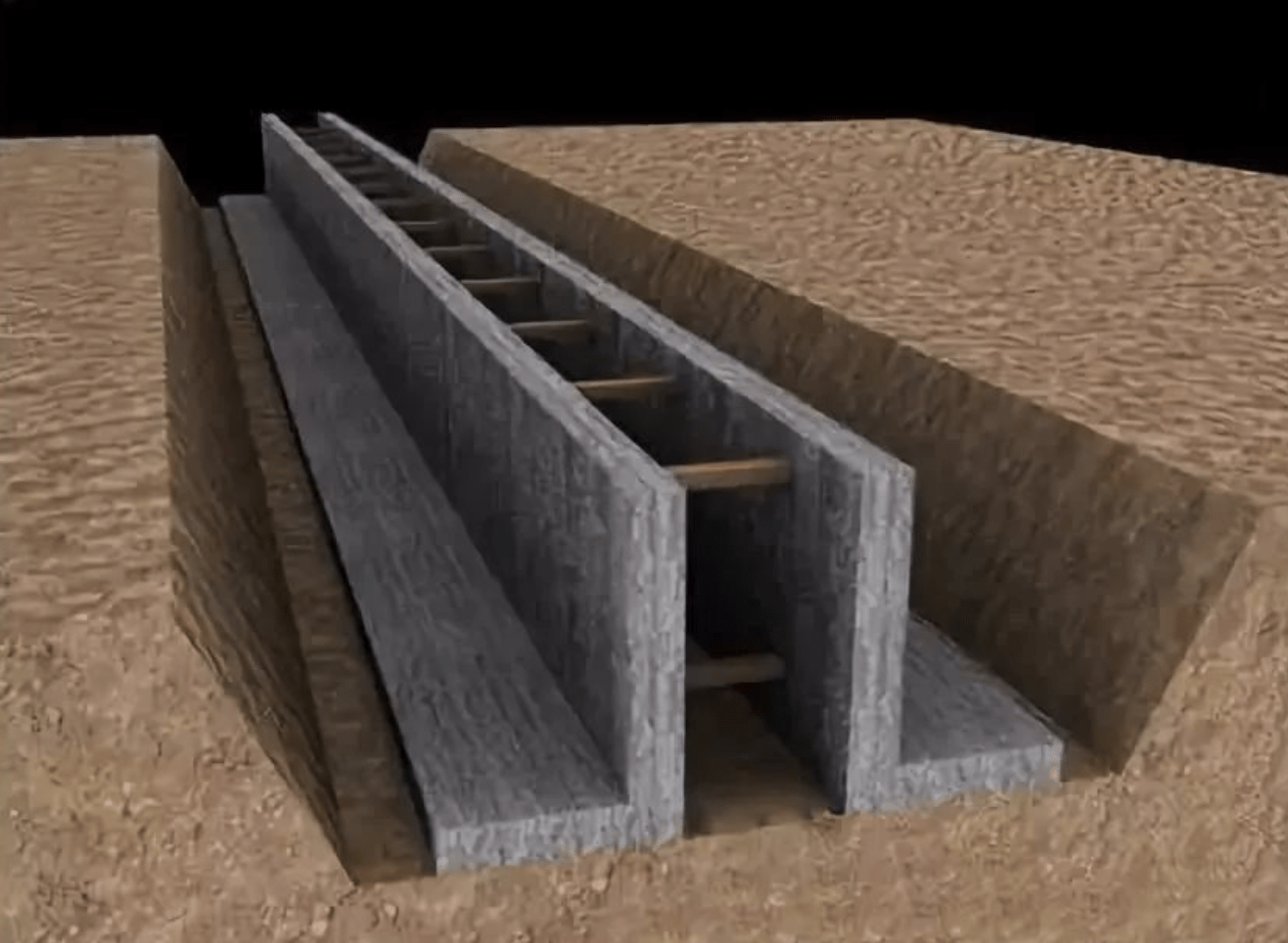
4. Economic Benefits
Comparative analyses demonstrate:
-
Case 1: 14% reduction in project costs
-
Case 2: 11% savings through integrated design
Additional advantages include: -
Reduced construction duration
-
Increased usable basement space
-
Simplified construction sequencing
5. Conclusions
Diaphragm walls offer transformative potential beyond conventional deep excavation support when engineered for multi-functionality. Successful implementation requires:
-
Comprehensive verification of both temporary and permanent performance criteria
-
Specialized waterproofing detailing at construction joints
-
Precision construction quality control
-
Integrated structural connection design
This approach proves economically viable even in favorable ground conditions, delivering compounded benefits in urban development projects where space, time, and environmental factors are critical constraints.