
Pre-Construction Preparations
1. Technical Documentation Preparation
-
Geotechnical investigation report for soft soil foundation
-
Soil test reports
-
Cement mixing pile design layout drawings (including original ground elevation and reinforcement depth)
-
Survey data: measurement records of plane control piles and benchmarks
-
Design clarification meeting minutes
-
Special construction scheme approved by the chief supervision engineer
2. Technical Training & Briefing
Before soft ground treatment construction:
-
Organize training for management and technical personnel on construction drawings, specifications, and contract requirements
-
Conduct multi-level technical and safety briefings for site crews
3. Construction Equipment Organization
Key equipment for cement mixing pile construction:
-
PH-5D bidirectional mixing pile machine (walking type)
-
Cement silos
-
Air compressor
-
Generator
Equipment requirements:
-
All equipment must pass pre-operation inspection and testing
-
The mixing pile machine must be equipped with a certified powder injection recorder (calibrated by the national metrology department)
4. Material Preparation
-
Primary material: Cement (must pass quality inspection before use)
-
All materials must comply with specification requirements
5. Site Preparation
-
Construct temporary access roads for material transport
-
Install power lines with a backup generator
-
Site leveling:
-
Remove topsoil and debris (roots, garbage)
-
Drain and dredge low-lying areas
-
Backfill with compacted clay in layers
-
Construct drainage ditches connecting to existing channels
-
-
Prepare cement silo foundations to prevent tipping
-
Implement safety signage:
-
Project identification signs
-
Construction area markers
-
Technical parameter displays (pile diameter, length, spacing)
-
Personnel responsibility boards
-
Site layout diagrams
-
Cement Mixing Pile Construction Process & Key Points
Cement deep mixing piles use cement as a curing agent, mechanically mixing with in-situ soft soil to create composite columns with:
-
High strength
-
Improved deformation characteristics
-
Excellent water stability
This method significantly improves soft ground bearing capacity and reduces settlement. The process includes dry (powder) and wet (slurry) methods, with field tests confirming powder injection as optimal for Yangtze River Delta soft ground treatment.
Key Equipment Feature: Bidirectional Mixing Head
-
Dual-layer design with outer and inner drill bits
-
Outer bit connects to outer drill rod with mixing blades on the casing
-
Inner bit features:
-
Core pipe with upper/lower wings (20-30cm spacing)
-
Powder injection ports near the upper wing
-
The lower wing functions as a drill tip
-
-
Reverse-rotation blades prevent soil ingress
-
Minimum blade length: 50cm
Construction Process Flow
1. Survey & Layout
-
Use a total station to set control points based on design coordinates
-
Mark pile positions with wooden stakes/lime
-
Verify elevations for pile top positioning
-
Number all piles for documentation control
-
Submit measurement reports for supervision approval
2. Machine Positioning & Leveling
-
Align the machine to the marked pile center
-
Adjust the support legs to level the operating platform
-
Verify verticality with a plumb bob (both directions)
-
Mark depth control lines on the drill rod
3. Drilling & Powder Injection
-
Start the main motor and approach the ground surface
-
Engage the air compressor when near the surface
-
Activate drill sequence:
-
Inner rod (counter-clockwise) first
-
Outer rod (clockwise) second
-
-
Apply pressure via the chain system
-
Open the powder valve when the inner rod engages
-
The lower wing breaks the soil
-
Upper wing mixes while injecting cement
-
4. Reaching Design Depth
-
Continue mixing to the target depth
-
Maintain powder injection for 30 seconds after reaching depth
5. Lifting & Final Mixing
-
Reverse rotation directions:
-
Outer rod switches to counter-clockwise
-
The inner rod switches to clockwise
-
-
Reduce air pressure near the pile top (1-3m range)
-
Lift to design elevation to complete the pile
Quality Control Measures
1. Pile Positioning Control
-
Total station layout with wooden center markers
-
Supervisor verification of spacing before drilling
2. Verticality Control
-
Platform leveling with a spirit level
-
Dual verification: rotary table level + plumb line
3. Pile Length Control
Two methods:
-
Depth markings on the drill rod
-
Digital depth recording
4. Process Parameter Control
Key parameters (established through test piles):
-
Cement content: 60kg per linear meter
-
Other parameters per approved technical specification
5. Powder Injection Control
Critical factors for bearing capacity:
Quantity Control:
-
Total cement inventory tracking
-
Computerized metering system (calibrated)
-
Continuous supply with 1m overlap for interruptions
-
30-second end-of-pile mixing
Uniformity Control:
-
Constant drilling speed
-
Precise pressure/speed monitoring
-
Real-time adjustment via metering system
6. Additional Quality Measures
-
Prohibit “make-up” injection during lifting
-
Time/depth recording (max 5s/5cm variance)
-
Continuous air flow during lifting
-
Cement screening to prevent clogging
-
Regular inspection of:
-
Delivery pipes (max 60m length)
-
Drill bit wear (max 10mm diameter loss)
-
Bit sizing (not exceeding pile diameter by 30mm)
-
Quality Inspection Protocol
1. Documentation Review
-
Complete construction records including:
-
Powder quantities per meter
-
Verticality measurements
-
Process parameters
-
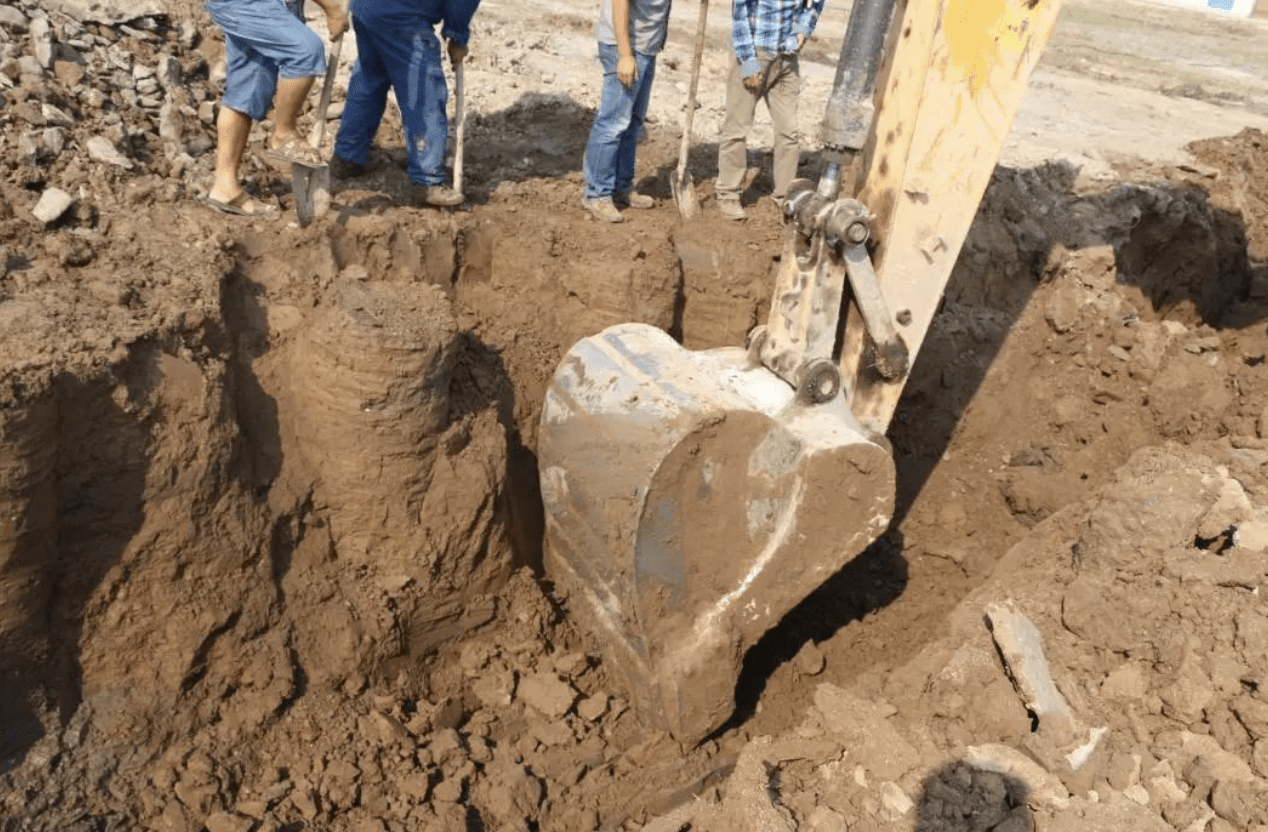
2. Visual Inspection (7-day)
-
Shallow excavation (1.5m) to check:
-
Mixing uniformity
-
Verticality
-
Pile alignment/spacing
-
-
Requirements:
-
Uniform cylindrical shape
-
No shrinkage/settlement
-
Even pile top alignment
-
3. Core Sampling (28-day)
-
Sampling rate: 1-2% of total piles
-
Sample location: 2/5 pile diameter position
-
Test specimens: 50mm×100mm cylinders
-
Strength requirements:
-
28-day UCS ≥1MPa
-
90-day UCS ≥1.4MPa
-
4. Load Testing (28-day)
-
Testing rate: 0.2-0.5% of piles (min 3 locations)
-
Verification of:
-
Single pile capacity
-
Composite foundation capacity
-
-
Must meet design bearing requirements
This comprehensive construction approach ensures high-quality bidirectional cement mixing piles for soft ground improvement, with multiple verification stages guaranteeing project specifications are met.