
Introduction
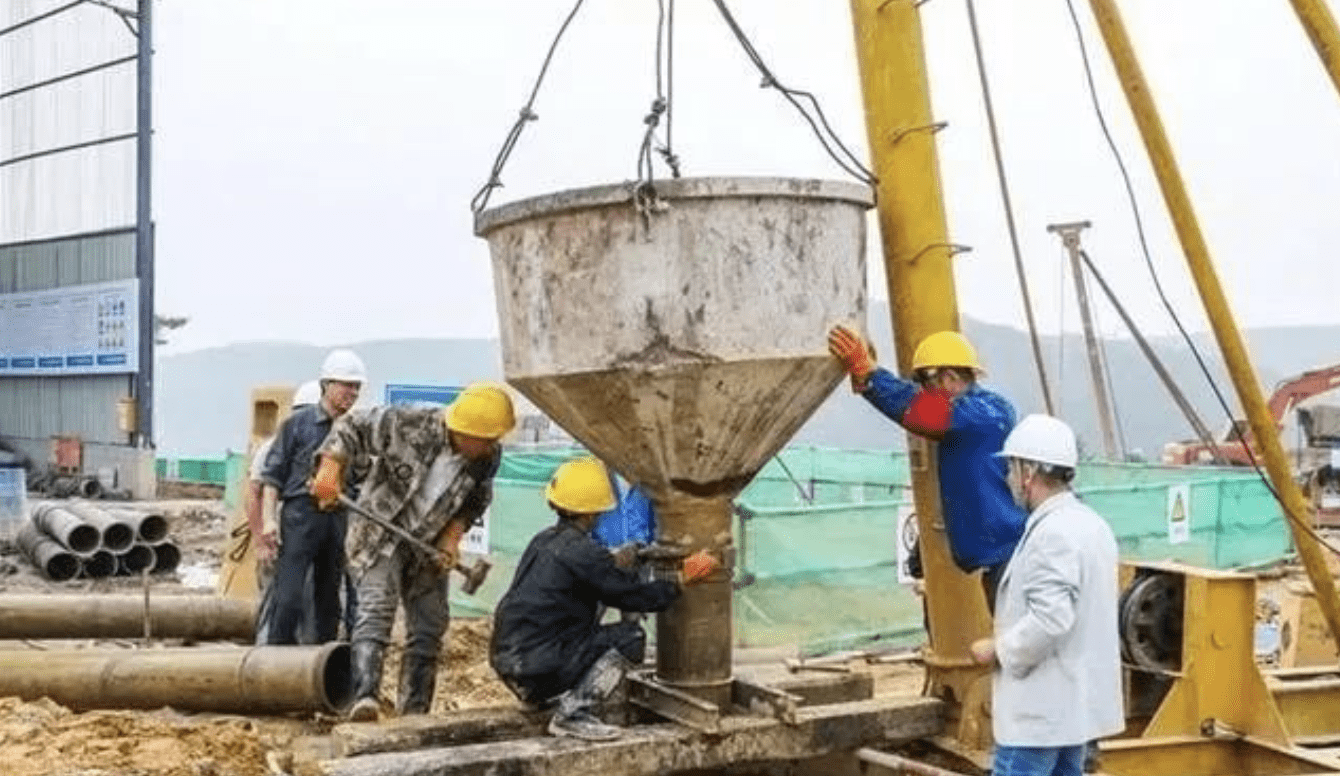
During pile foundation construction, defective piles may occur due to geographical conditions, mechanical equipment, or human factors. Once defects appear, different treatment methods are applied based on severity. The most cost-effective solutions are always in high demand.
Types of Pile Foundation Defects
1. Top Section Defects
-
Cause 1: Slurry sedimentation during underwater concrete pouring makes it difficult to estimate floating slurry thickness accurately. Insufficient over-pouring leads to mud inclusion, affecting concrete quality.
-
Cause 2: Excessive or uneven force when removing pre-embedded steel casings disturbs the top concrete.
-
Cause 3: High-power pneumatic hammers during pile head chiseling may damage concrete around sonic tubes.
2. Middle Section Defects
-
Cause 1: Poor geological conditions cause partial hole collapse during concrete pouring, hindering slurry flow and creating localized defects.
-
Cause 2: Overly forceful removal of the conduit disrupts concrete continuity.
-
Cause 3: Poor conduit airtightness allows slurry infiltration, breaking the pressure difference. Minor cases affect concrete quality, while severe cases block concrete flow, causing pile fractures.
3. Bottom Section Defects
-
Cause 1: Incomplete slag removal before concrete pouring leads to sediment accumulation.
-
Cause 2: Poor initial concrete sealing causes mud inclusion or weak compaction.
-
Solution: Core drilling and grouting are commonly used for treatment.
Methods for Treating Defective Piles
1. Top Section Defect Treatment
-
Procedure:
-
Chisel downward until reaching intact concrete, matching test data.
-
Use the same-grade concrete for pile extension.
-
Precaution: Protect reinforcement bars during chiseling.
-
2. Middle Section Defect Treatment
-
Minor Defects: Grouting may suffice.
-
Severe Defects (≥2m): Often require pile abandonment and re-drilling at the same location, followed by rebar cage installation and concrete pouring.
3. Bottom Section Defect Treatment
-
Friction Piles: Calculate load-bearing capacity. If the remaining pile length meets requirements, no treatment is needed. Otherwise, grouting is necessary.
-
Rock-Socketed Piles: Must be treated—bottom grouting is a viable solution.
Grouting Process for Bottom Defects
(1) Preparation
-
Conduct geological and groundwater analysis.
-
Calculate cement slurry volume and adjust mix design (using higher-grade cement than pile concrete).
-
Determine grouting pressure parameters.
(2) Drilling
-
Drill three grouting holes within the pile, ensuring vertical alignment.
-
Drill 1m deeper than the pile length to avoid reinforcement interference.
(3) Water Pressure Test
-
Cleans grouting channels and adjusts parameters.
-
Removes sediment and slurry.
-
Procedure:
-
Inject clean high-pressure water into Hole 1 (close Hole 2, open Hole 3) until water runs clear.
-
Repeat for Hole 2 (close Hole 3, open Hole 1).
-
Repeat for Hole 3.
-
(4) Grouting
-
Mix slurry per design ratio, ensuring proper water and additive measurements.
-
Procedure:
-
Inject slurry into Hole 1 (open Holes 2 & 3) until slurry displaces all water and 100L is discharged.
-
Repeat for Hole 2 (open Holes 1 & 3).
-
Repeat for Hole 3.
-
-
Pressure Test:
-
Apply 50Pa pressure sequentially to each hole for 5 minutes.
-
-
Finally, close all valves, dismantle the equipment, and clean.
(5) Parameter Control for Optimal Grouting
-
Monitor pressure, slurry density, injection rate, and volume—key factors influencing effectiveness.
-
Sudden pressure drop? Indicates leakage—add additives and perform intermittent grouting.
(6) How Grouting Enhances Load-Bearing Capacity
-
Improves Soil Conditions:
-
Post-drilling, the surrounding soil weakens. Grouting compacts and strengthens the soil-pile interface.
-
-
Eliminates Sediment Weakness:
-
Replaces and consolidates bottom sediment, improving load transfer.
-
-
Boosts Friction Resistance:
-
Slurry permeates upward, filling gaps and forming stone veins along the pile, enhancing side friction.
-
-
Optimizes Load Distribution:
-
Creates an enlarged base, increasing the load-bearing area.
-
Efficiency Analysis
Post-grouting ultrasonic tests confirm significant improvement in pile concrete integrity, proving the method’s effectiveness.
Conclusion
Defective pile foundations require tailored solutions based on defect location and severity. Grouting—especially for bottom defects—enhances load capacity cost-effectively. Proper execution ensures long-term structural stability.