
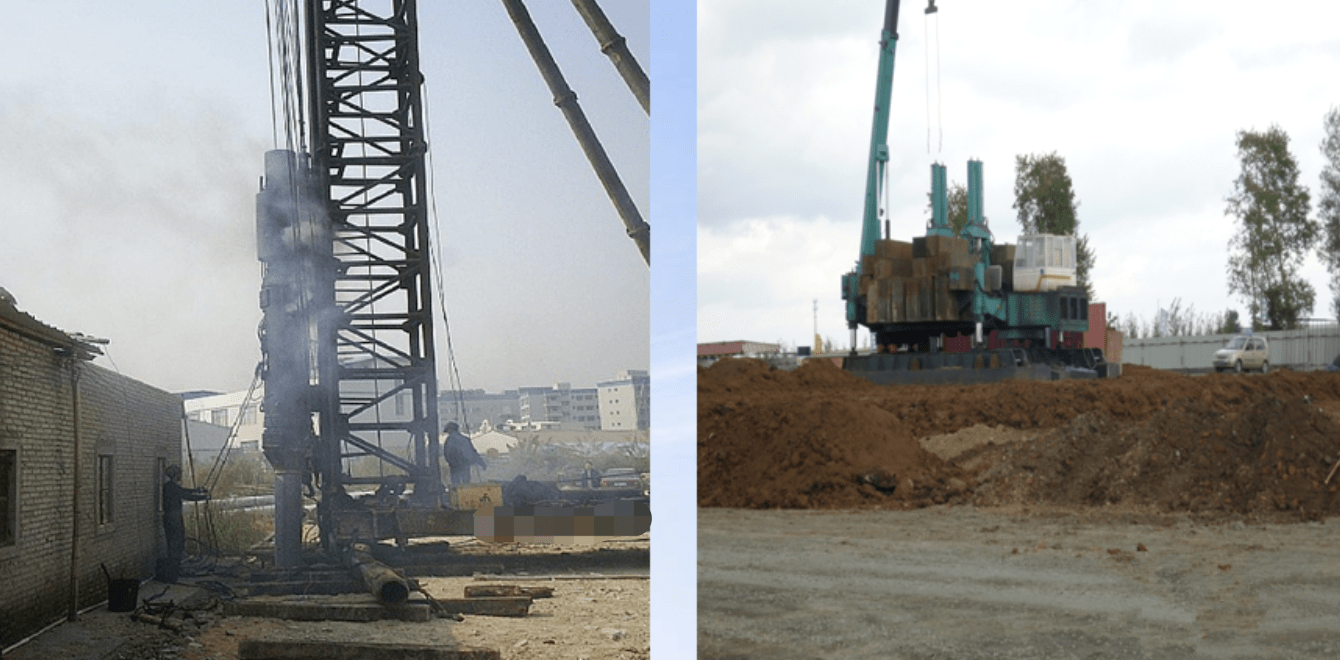
Piling Methods for Prestressed Pipe Piles
Prestressed pipe pile driving equipment can be divided into two main types: impact hammers and static pressure machines. The selection of appropriate machinery depends on project requirements, soil conditions, and design specifications.
Fundamentals of Prestressed Concrete Pipe Piles
Classification of Prestressed Concrete Pipe Piles
-
PHC Piles: Prestressed High-strength Concrete Piles (Code PHC)
-
PC Piles: Prestressed Concrete Piles (Code PC)
-
PTC Piles: Prestressed Thin-walled Concrete Piles (Code PTC)
Pile Numbering and Pile Tip Classification
Each pile type has specific numbering conventions and tip configurations designed for different ground conditions and load requirements.
Contractor Qualification Review
Company Credentials
-
Grade 1 Enterprises: Qualified for all types of foundation engineering projects without cost limitations
-
Grade 2 Enterprises: Can undertake foundation projects with budgets up to 10 million RMB
-
Grade 3 Enterprises: Limited to projects with budgets under 3 million RMB
Subcontractor Verification
Essential checks include:
-
Verification of business licenses and safety production permits
-
Review of the proposed project organizational structure
-
Examination of main contractor-subcontractor agreements
-
Confirmation that qualifications match the project scale
Personnel Qualification Assessment
Key project team members must include:
-
Project managers
-
Safety officers
-
Survey technicians
-
Quality inspectors
-
Documentation specialists
Specialized operators (electricians, welders, and pile driver operators) must possess valid provincial-level qualification certificates issued by construction authorities.
Construction Organization Plan Review
Critical review points for construction plans:
-
Technical Parameters: Verify compliance with design requirements, including pile diameter, type, wall thickness, bearing capacity, penetration rate, termination criteria, and geological conditions
-
Management Structure: Evaluate appropriateness of proposed project team organization
-
Regulatory Compliance: Ensure no violation of mandatory standards
-
Alignment Tolerance:
-
Vertical piles: Maximum deviation ≤ 15% of the tilt angle tangent value
-
Inclined piles: Position deviation must meet the specification table requirements
-
-
Quality Assurance: Confirm measures meet regulatory standards
-
Equipment Routing: Verify machine movement plans match site conditions
-
Safety Protocols: Assess adequacy of technical safety measures
Load Testing Requirements
-
All engineering piles require bearing capacity verification
-
For critical foundations (Grade A) or complex geological conditions:
-
Static load testing is mandatory
-
Minimum test quantity: 1% of total piles (≥3 piles)
-
For projects with <50 piles: Minimum 2 test piles
-
Design Drawing Review Checklist
-
Verify the presence of designer seals and official design unit stamps
-
Confirm the completeness of the geological survey documentation
-
Check the consistency of plane positions, dimensions, and elevations
-
Clarify pile tip specifications, wall thickness, plug concrete strength, and effective pile length
-
Review bearing stratum penetration depth and single pile design parameters
-
For anti-floating designs: Verify uplift pile arrangement and specifications
Piling Equipment Inspection
Pre-construction machinery checks are essential:
Impact Pile Drivers
-
Verify hammer weight matches design requirements
-
Inspect the wire rope condition
-
Check motor operation status
-
Identify any equipment malfunctions
Static Pressure Pile Drivers
Additional checks beyond basic inspections:
-
Pressure gauge responsiveness
-
Calibration validity
-
Compatibility of pressure-gravity conversion tables with the machine model
Quality Control: Pile Delivery Inspection
Key Inspection Points
-
Documentation Review:
-
Factory certificates
-
Structural performance test reports
-
-
Visual Inspection:
-
Surface defects (honeycombs, exposed rebar, cracks)
-
Color uniformity
-
Integrity of the pile top
-
-
Dimensional Verification:
-
Diameter tolerance: ±5mm
-
Wall thickness tolerance: ±5mm
-
Tip alignment: <2mm deviation
-
Top surface flatness: ≤10mm
-
Straightness: <1/1000 of length (L)
-
-
Material Requirements:
-
Concrete must reach 100% design strength
-
Proper curing age achieved
-
-
Storage Conditions:
-
Level, solid storage area
-
Effective anti-rolling/sliding measures
-
Maximum stacking height: 4 layers
-
Trial Piling Procedures
Participant Requirements
Trial piling requires representatives from:
-
Design units
-
Geological survey teams
-
Supervision agencies
-
Construction companies
-
Project owners
-
(Optional) Quality supervision station observers
Pre-Trial Preparations
-
Verify building coordinates and pile positions
-
Review relevant geological data
-
Confirm design parameters:
-
Penetration rate
-
Tip bearing capacity
-
Embedment depth
-
Driving depth
-
Trial Pile Evaluation
For Static Pressure Piles:
-
Compare machine specifications with pressure-bearing capacity charts
-
Determine final pressure value (typically 1.5-2× design value)
-
Control repressing time and parameters
For Impact Piles:
-
Establish hammer stop criteria based on penetration rate
-
Typical requirement: Final three hammer sets (10 blows/set) with ≤2cm penetration
Document trial results in formal records signed by all parties. Conduct bearing capacity tests if needed before full-scale construction.
Construction Process Quality Control
-
Material Receiving:
-
Verify pile type and wall thickness
-
Confirm pile tip compliance
-
Maintain detailed material logs
-
-
Baseline Verification:
-
Check original coordinates and control points
-
Review the pile layout and spacing
-
-
Equipment Management:
-
Approve pile driver routing plans
-
Implement systematic pile numbering
-
Prevent missed pile locations
-
-
Installation Quality:
-
Maintain vertical alignment (using theodolites or plumb lines)
-
Ensure complete pile tip welding
-
Achieve full weld penetration at joints
-
Observe proper cooling times
-
-
Driving Depth Control:
-
Calculate based on design elevation and site conditions
-
Minimize additional splicing during driving
-
Investigate abnormal situations (sudden breaks or depth changes) with design/geotechnical teams
-
-
Termination Criteria:
-
Strictly control final pressure values or penetration rates
-
Manage repressing duration and load
-
-
Record Keeping:
-
Track material deliveries and installations
-
Conduct periodic quantity reconciliations
-
Maintain accurate construction logs
-
Document supervision activities
-
Pile Foundation Testing Protocol
Testing Plan Requirements
-
Requires design unit confirmation and participant signatures
-
Preparation documents should include:
-
Geotechnical reports
-
Pile drawings
-
Testing quantities
-
Construction records
-
Special client requirements
-
Testing Components
A. Integrity Testing (Low Strain Method)
-
Minimum 1 pile for 3-pile caps or fewer
-
≥20% of total piles (minimum 10 piles)
B. Bearing Capacity Testing (Static Load)
-
≥3 piles under the same conditions
-
≥1% of total piles
-
Minimum 2 piles for projects with ≤50 piles
Test Pile Selection Criteria
Prioritize:
-
Piles with questionable construction quality
-
Structurally critical piles (per design)
-
Piles in anomalous geological zones
-
Piles with different construction methods
-
Class III piles from integrity tests (for capacity verification)