
Introduction
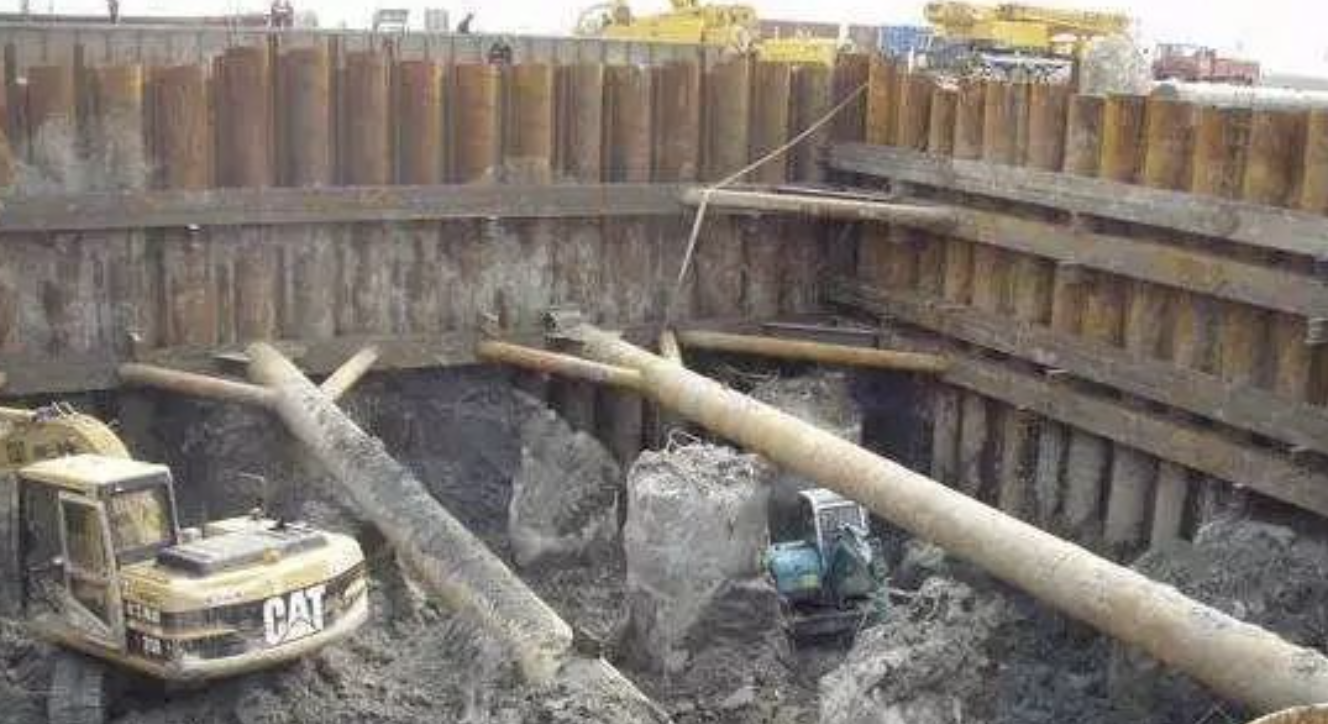
With rapid urbanization and the increasing scarcity of land resources, maximizing underground space utilization has become essential. The scientific, safe, and efficient use of underground spaces heavily relies on effective excavation support systems, the cost of which varies significantly depending on depth, geological conditions, and surrounding environments.
Common deep excavation support methods include reinforced concrete diaphragm walls, bored piles with cement-soil mixing cut-off curtains, SMW (Soil Mixing Wall) piles, and the TRD (Trench Cutting & Re-mixing Deep Wall) method. Among these, the TRD method has gained widespread recognition for its safety, maturity, and reliability, making it applicable in construction, transportation, water conservancy, and power engineering projects.
Originally developed in Japan in the 1990s, the TRD method was introduced to China in the early 2000s and has since been widely adopted in cities like Shanghai and Hangzhou. Its versatility in various soil and gravel layers makes it indispensable for foundation reinforcement, seepage prevention, and underground engineering. This article explores the TRD method’s principles, characteristics, construction process, and key technical considerations.
1. TRD Method: Working Principle and Features
1.1 Working Principle
The TRD method utilizes a chainsaw cutter system to excavate deep, narrow trenches. The process involves:
-
Inserting a vertically connected chainsaw cutter box into the ground.
-
Horizontally cutting and mixing soil while injecting cement slurry to form a continuous underground wall.
-
Optionally inserting H-beams for reinforcement before the slurry hardens.
-
Constructing an integrated support system with internal bracing (steel pipes or reinforced concrete beams).
1.2 Key Features
1.2.1 High Stability
-
The equipment’s low center of gravity (~10m height) ensures stability, minimizing the risk of tipping.
-
Ideal for confined spaces with height restrictions.
1.2.2 Superior Wall Quality & Efficiency
-
Ensures uniform mixing and continuous construction, eliminating weak joints.
-
Forms a seamless, high-strength wall with excellent water-cutoff performance.
-
Allows flexible H-beam insertion for material savings and faster construction.
1.2.3 Precision Construction
-
Equipped with real-time monitoring and auto-correction systems.
-
Maintains vertical accuracy (typically within 1/250) regardless of depth.
1.2.4 Strong Adaptability
-
Adjustable cutter chains accommodate varying soil hardness (up to N-value 100).
-
Effective in gravel layers (<100mm particle size) and soft rock (<5MPa unconfined strength).
1.2.5 Uniform Wall Quality
-
Ensures consistent cement-soil mixing along the depth, minimizing strength variation.

2. TRD Construction Process
Three-Step Construction Method:
-
Forward Cutting: Inject cutting fluid while advancing horizontally.
-
Reverse Cutting: Retract while mixing soil, optionally adding more cutting fluid.
-
Final Mixing: Advance again while injecting stabilizing fluid to form the wall.
2.1 Survey & Layout
-
Set control points based on design coordinates.
-
Verify positions with temporary markers.
2.2 Trench Excavation & Guide Wall Installation
-
Excavate a guide trench to ensure vertical accuracy (<5‰ deviation).
-
Remove obstacles and backfill as needed.
2.3 Pre-Buried Box Installation
-
Dig a 3 m-deep pre-buried pit and place the cutter box.
2.4 TRD Machine Setup
-
Align the machine using laser theodolites.
-
Connect the cutter box and begin self-penetration.
2.5 Inclinometer Installation
-
Install multi-section inclinometers to monitor verticality.
2.6 Wall Formation
-
Mix cement slurry with soil via rotating cutters to form a uniform wall.
-
Single-Cycle Method: Inject stabilizing fluid while advancing.
-
Triple-Cycle Method: Cut forward, retract, then stabilize.
2.7 H-Beam Insertion
-
Use welded H-beams with lifting holes (Ø80mm) and reinforcement plates.
-
Apply release agents for future extraction.
2.8 Cutter Box Extraction
-
Remove the cutter box carefully to avoid ground settlement.
3. Key Technical Considerations
3.1 Survey & Preparation
-
Verify axis positions and elevations.
-
Address geological risks and underground obstacles in advance.
3.2 Obstacle Removal & Ground Improvement
-
Backfill and compact excavated areas.
-
Reinforce the site with steel plates for stability.
3.3 Verticality Control
-
Ensure guide trench precision.
-
Calibrate machine levelness and cutter box alignment.
3.4 Real-Time Monitoring
-
Use inclinometers to detect and correct deviations promptly.
3.5 Cement Mixing & Overlapping Zones
-
Maintain proper slurry mixing ratios.
-
Ensure ≥50cm overlap between adjacent walls with controlled advance rates.
3.6 Cutter Box Extraction
-
Adjust grout flow to match extraction speed, preventing suction-induced settlement.
3.7 Quality Documentation
-
Record construction data and anomalies.
-
Report issues immediately for corrective actions.
4. Conclusion
The TRD method stands out for its minimal ground disturbance, high watertightness, and adaptability across diverse geologies. Its advantages—low noise, reduced waste, shorter工期, and cost-effectiveness—make it a preferred choice for modern excavation support. Successful applications, such as the Hangzhou Zhuantang project, demonstrate their reliability in complex urban environments.
By adhering to strict technical protocols and real-time monitoring, the TRD method ensures safe, efficient, and sustainable underground construction.